Mayor Mamdani Faces Organised Opposition Over 9/11 Ceremony Appearance
Developed over time first seen 2 months ago
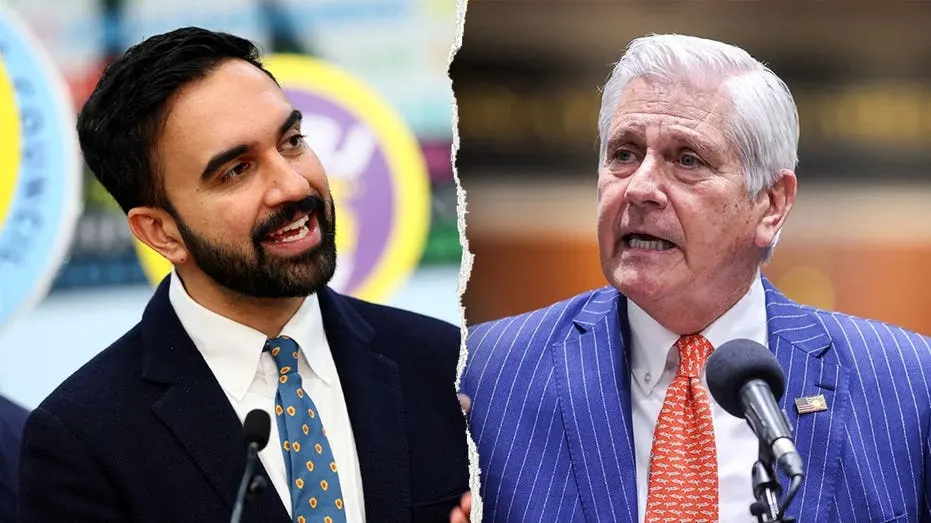
Opposition to New York City Mayor Zohran Mamdani’s planned attendance at the 25th-anniversary 9/11 commemoration became more organised in early August. Bruce Blakeman, Nassau County executive and the Republican candidate for New York governor, urged attendees to turn their backs on Mamdani in a peaceful protest if he appears. The call followed an online petition from some relatives of people killed in the attacks asking that Mamdani not attend, citing concerns about his public positions and rhetoric. Mamdani said he would attend to honour victims’ families, survivors and first responders. Other bereaved relatives defended his inclusion, while the 9/11 Memorial & Museum said it seeks to keep the commemoration free of partisan politics; officials attend as witnesses and do not give speeches.
The dispute followed a separate hostile reception for Mamdani at an NYPD National Night Out Against Crime event on Staten Island. Video and news reports showed sections of the crowd booing as he delivered remarks lasting less than a minute. Local artist and activist Scott LoBaido, who had reportedly intended to question the mayor about police staffing, was stopped from approaching him and then suffered a cardiac arrest; he was treated by emergency responders and later indicated that he was recovering. The two incidents highlighted opposition to Mamdani among some police supporters and conservative political figures, although they do not establish a uniform view among 9/11 families or New Yorkers more broadly.
- Republican candidate Bruce Blakeman urged a silent protest if Mamdani attends the 9/11 ceremony.
- Some victims’ relatives oppose Mamdani’s attendance, while others support it.
- Mamdani was also booed at a Staten Island police-community event, where an activist suffered a cardiac arrest.
New here? Start with this
Tensions between New York City Mayor Zohran Mamdani and parts of the public have been building since he took office, with critics questioning his fitness to represent the city at solemn civic occasions. The 11 September attacks in 2001 killed nearly 3,000 people in New York, and the annual memorial ceremony is a deeply sensitive event for victims' families and first responders, meaning any dispute over who attends carries particular weight this year, the 25th anniversary.
Bruce Blakeman, a Republican candidate for New York State governor, and some family members of 9/11 victims are among those objecting to Mamdani's presence at the ceremony, though their specific reasons are not detailed here. Separately, Mamdani has faced hostile receptions at other public events, including one meant to honour police officers, pointing to a wider pattern of friction between the mayor and certain segments of the public.
This matters because it touches on how a mayor is received at events meant to unite a city in shared grief, and because organised campaigns to exclude an elected official from such occasions raise questions about civic norms, free expression and public safety, as underlined by a medical emergency during one recent confrontation.
Both sides, in good faith
The strongest fair case each way — we don't pick a winner.
The case for
Those organising the opposition argue that the 9/11 memorial belongs first and foremost to the victims' families and survivors, and that their wishes about who should stand alongside them in grief ought to be respected above political convention. They contend that Mamdani's past rhetoric and positions, particularly on policing and foreign policy, are so at odds with what many families feel the day represents that his presence risks turning an act of shared mourning into a political statement. For them, declining to welcome him, or visibly turning away, is a legitimate expression of grief and principle rather than an attack on the office of mayor.
The case against
Those defending Mamdani's right to attend argue that the mayor of New York has long played a customary role at this ceremony as a representative of the whole city, not as an endorsement of any individual's politics, and that continuity of civic leadership matters precisely on a day meant to unite people across political lines. They contend that organised campaigns to shun or exclude a sitting mayor risk politicising a solemn commemoration in exactly the way critics claim to be guarding against, and that treating an elected leader as unwelcome sets a troubling precedent for how future officials of any party might be treated at moments meant for national unity rather than division.
Full account
New York City Mayor Zohran Mamdani is facing an organised campaign urging him to stay away from this year's 25th anniversary commemoration of the 11 September 2001 terrorist attacks, after a public petition and remarks from a leading Republican politician questioned whether he should be permitted to attend. Mamdani, who has said repeatedly that he intends to be present at the Lower Manhattan ceremony, finds himself at the centre of a wider dispute over his past comments on Middle East-related rhetoric, even as other victims' relatives have publicly rallied behind his right to take part.
Bruce Blakeman, the Republican candidate for New York governor and Nassau County executive, whose nephew died in the South Tower, said mourners should consider turning their backs on Mamdani in protest should he show up, likening the ceremony to a wake that an unwelcome guest ought to avoid. Blakeman argued the mayor's failure to explicitly disavow the phrase "globalise the intifada" made his presence inappropriate. His comments followed a Change.org petition, addressed to the National September 11 Memorial & Museum, that cited concern over Mamdani's "public positions, associations, and responses to rhetoric" as grounds for reconsidering his involvement; organisers say the appeal has drawn tens of thousands of signatures. Mamdani has stood firm, saying he would "proudly honour the families, the survivors, the first responders" by attending, while the memorial's organisers have stressed that the event has traditionally been kept free of party politics, noting that every sitting president, governor and mayor since 2001 has attended purely to bear witness, without speaking.
The push to keep Mamdani away has not gone unchallenged. Some relatives of those killed in the attacks have spoken out in his defence, among them Elizabeth Miller, whose father died on 9/11 and who leads the advocacy group September 11th Families for Peaceful Tomorrows. The organisation issued a statement condemning what it called Islamophobic sentiment behind efforts to exclude the mayor, a view echoed by the Council on American-Islamic Relations, whose spokesperson described the campaign as bigotry rather than legitimate grievance. Not all family members agree, however: at least two petitioners who lost spouses in the attacks told reporters their objection rests on discomfort with figures and causes Mamdani has publicly supported, rather than his faith.
The row over the memorial comes against a backdrop of increasingly hostile public receptions for the mayor. Days earlier, Mamdani was loudly booed by sections of a crowd of several thousand at a National Night Out Against Crime gathering in Staten Island, a policing-community event where he spoke for under a minute before leaving the stage; accounts vary on whether attendance numbered roughly 3,500 or ran into the thousands, though all describe jeers mixed with occasional applause. Shortly afterwards, Staten Island artist Scott LoBaido, who had reportedly hoped to press Mamdani over stalled plans to add 5,000 NYPD officers, suffered a cardiac arrest after being kept from approaching the mayor; he was treated at the scene and later said on social media that he was recovering. Coverage of that episode framed it as one of the sharpest public rebukes Mamdani has faced since taking office, reflecting Staten Island's reputation as the city's most Republican-leaning borough, which voted heavily against him in last year's mayoral election.
Where outlets differ
Fox News Digital's report centres on Blakeman's protest suggestion and the petition drive, quoting only critics and the memorial organisers, without mentioning the counter-campaign from pro-Mamdani 9/11 families.
CBS News New York foregrounds the defence of Mamdani by groups such as September 11th Families for Peaceful Tomorrows and CAIR, framing the petition effort as potentially rooted in anti-Muslim bias, and cites a specific petition figure of over 72,000 signatures not given by Fox.
The Daily Mail-style report and the India Today (Ritaban Misra) piece both cover a separate but related episode — the Staten Island National Night Out booing and Scott LoBaido's cardiac arrest — with India Today adding explicit editorial framing that Staten Island's Republican lean explains the hostility and calling it one of Mamdani's sharpest rebukes to date.
Crowd-size estimates for the Staten Island event differ slightly between sources (around 3,500 attendees versus a looser description of 'thousands').
Only the Fox source directly links the 9/11 ceremony dispute to Mamdani's stance on the phrase 'globalise the intifada'; the other sources covering the memorial controversy describe the objections in more general terms as concerns over his 'positions, associations and rhetoric.'
Coverage
- Fox News — New York gubernatorial candidate urges 9/11 attendees to turn away from Mamdani during ceremony
- Daily Mail — Mamdani booed off stage at NYC event honoring police as protester suffers cardiac arrest attempting to question him