Ukraine hits two oil refineries deep in Russian territory
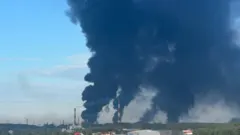
Ukraine has struck two oil refineries deep inside Russia in a fresh escalation of its campaign against Moscow's energy revenues, alongside attacks on Russian patrol boats and "shadow fleet" tankers in the Black Sea. President Volodymyr Zelensky said the strikes on the Bashneft-Novoil and Slavneft-Yanos refineries were intended to curb the oil income Russia uses to fund its war, as both sides continue intensifying attacks on cities, energy infrastructure and warehouses despite a static front line and stalled peace efforts.
The Slavneft-Yanos refinery, in Russia's Yaroslavl region, was set ablaze in what regional governor Mikhail Evraev called the "largest enemy drone attack", injuring four people, with 93 drones reportedly shot down overnight and BBC Verify confirming footage of at least four fires at the site. The Bashneft-Novoil refinery, roughly 1,300km from Ukraine, was also hit. In return, Russian strikes killed at least 11 people across Ukraine, including in Balakliya, Lozova and Dnipropetrovsk region, left the city of Kherson without power after a strike on critical infrastructure, and killed one person in Odesa; Russia said it had intercepted 605 Ukrainian drones and targeted Ukrainian fuel, energy and transport facilities in response.
In short
- Ukraine struck two Russian oil refineries and Black Sea vessels
- Aim: cut oil revenues funding Russia's war effort
- Russian counter-strikes killed 11+ in Ukraine, blacked out Kherson
Steelman: both sides, in good faith
The strongest fair case each way — we don't pick a winner.
The case for
Ukraine's campaign against Russian energy infrastructure represents sound military strategy aimed at degrading Russia's capacity to wage war. Oil refineries are legitimate military-industrial targets that generate revenue directly funding the conflict, and destroying them reduces Russia's ability to sustain military operations and production. Supporters argue this represents a proportionate response to Russian strikes on Ukrainian infrastructure and is a rational escalation of tactics to bring about a favourable resolution, employing established wartime doctrine of disrupting an adversary's economic capacity.
The case against
Critics argue that deep strikes on energy infrastructure risk dangerous escalation and impose severe humanitarian costs on civilians. They contend such attacks primarily harm ordinary people dependent on energy for heating and basic services, violate emerging norms around the scope of armed conflict, and may harden rather than weaken Russian resolve. Opponents worry the escalatory cycle could draw NATO in directly and question whether military benefits justify the civilian suffering and risks of wider war, advocating restraint and renewed diplomatic efforts instead.
Explained simply
Ukraine and Russia have been at war since Russia’s full-scale invasion in 2022. Both countries have attacked military and civilian infrastructure far from the front line, including energy sites that supply fuel and electricity.
Oil is a major source of income for Russia, and refineries turn crude oil into fuels such as petrol and diesel. Ukraine says strikes on these sites are intended to reduce the money Russia can use to support its war. The refineries are in different parts of Russia, well beyond the border.
The Black Sea is also an important route for shipping oil and other goods. Attacks on patrol boats and tankers add to pressure on maritime traffic, while Russian strikes on Ukrainian cities and infrastructure show how both sides’ campaigns affect people and essential services.
Europe Government Politics World