Trump imposes 15% tariff on key chip material to counter China
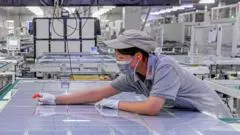
US President Donald Trump has signed an executive order imposing a 15% tariff on imported polysilicon, a material essential for making semiconductors and solar panels, as part of efforts to counter China's growing dominance in chip manufacturing. The move follows a national security investigation and is aimed at protecting American producers, though it has drawn sharp criticism from Beijing, with the Chinese embassy in Washington accusing the US of "abusing state power" and warning it will act to defend its companies.
The order, which also sets minimum import prices on polysilicon and related products, will take effect in December, alongside new incentives to boost domestic production. Trump said decades of foreign competition had eroded the US's share of global polysilicon output from 50% in 2005 to under 2% in 2024, with China now holding a near-monopoly on the material. The measure is expected to benefit US producers Hemlock Semiconductor and Wacker Chemie, and comes amid a wider tit-for-tat trade standoff between Washington and Beijing, which has already seen US restrictions on Chinese drones and robots, and Chinese countermeasures including tighter export controls and a security review of imported printers and copiers.
In short
- Trump sets 15% tariff on imported polysilicon, key chip and solar material
- Aims to boost US producers as China dominates global supply
- China calls move disruptive, vows to protect its firms
Steelman: both sides, in good faith
The strongest fair case each way — we don't pick a winner.
The case for
Supporters contend that restoring domestic polysilicon production is essential to national security and economic resilience, arguing that ceding 98% of global output to a potential strategic rival leaves America dangerously vulnerable to supply disruption and unable to meet its own semiconductor and renewable energy needs. They note that China has systematically used protectionist policies and state support to dominate this critical sector, and that tariffs represent a justified tool to recapitalise American manufacturing and rebuild supply chain independence, with the long-term strategic benefits justifying temporary price increases.
The case against
Critics argue that tariffs raise production costs throughout the semiconductor and solar industries, potentially slowing the clean energy transition America needs to accelerate, whilst offering no guarantee that protected American producers will achieve competitive efficiency. They contend that if China can profitably undercut American producers, tariffs merely shelter inefficient domestic players and invite retaliation that harms American exporters, and that targeted subsidies for research and domestic production would achieve strategic goals more effectively without imposing broad cost penalties on consumers and downstream manufacturers.
Explained simply
Polysilicon is a highly purified form of silicon used to make semiconductors, which power computers and other electronics, as well as solar panels. It is produced in a small number of countries, and China has become the leading supplier.
The United States says reliance on imported polysilicon raises national security concerns and has weakened its own producers. The tariff and minimum import prices are intended to support US companies, including Hemlock Semiconductor and Wacker Chemie, alongside incentives for domestic production.
The measure is part of a broader trade dispute between Washington and Beijing, which have both imposed restrictions affecting industries and imports. Changes to polysilicon prices and supply could affect chip and solar panel makers in both countries.