World news and discussion on TalkFuse.
US strikes $1.2bn deal to pay German firm to halt offshore wind projects
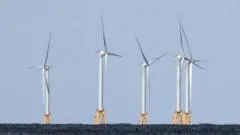
The US Department of the Interior has agreed to pay German energy company RWE $1.2bn (£892m) to abandon several offshore wind projects in American waters. The deal reflects the Trump administration’s wider effort to stop offshore wind development and redirect energy investment towards fossil fuels, particularly gas and oil.
RWE will give up leases off California, Louisiana and in the New York Bight, saying it sees no foreseeable route to securing permits. It plans to put $900m (£669m) of the payment into a Louisiana LNG export terminal and says it will invest about €17bn (£14.5bn; $19.6bn) in US generation capacity over six years; similar agreements have already been made with TotalEnergies and Duke Energy.
In short
- RWE will abandon US offshore wind projects for a $1.2bn government payout.
- Much of the money will be redirected into a Louisiana LNG project.
- The deal advances Trump’s push towards fossil fuels.
Steelman: both sides, in good faith
The strongest fair case each way — we don't pick a winner.
The case for
The government's approach prioritises national energy security and economic stability by directing investment towards proven infrastructure. Offshore wind projects face substantial regulatory, environmental and logistical challenges that could consume capital with uncertain outcomes, whilst liquefied natural gas export capacity and diversified fossil fuel generation offer reliable, near-term energy supply and job creation in established sectors. Redirecting resources to infrastructure with proven deployment timescales and returns maintains American competitiveness in global energy markets.
The case against
This subsidy represents a costly distortion of the energy market, using public funds to artificially suppress renewable energy development whilst favouring entrenched fossil fuel interests. Offshore wind offers substantial long-term benefits through clean, sustainable power generation, job creation, and reduced dependence on volatile international markets and carbon-intensive fuels. Rather than paying companies to abandon clean projects, government should permit market competition and invest in renewable infrastructure, addressing climate concerns whilst capturing the economic opportunities of clean energy leadership.
Explained simply
Offshore wind farms generate electricity from turbines placed in the sea. Before building them, energy companies need government leases to use areas of seabed, as well as permits for construction and operation; projects can take years to develop.
RWE is a German energy company that also operates in the United States. The areas involved are off California, Louisiana and New York, and the company says it does not expect to obtain the permits needed to proceed. Its plans include investing in an LNG export terminal in Louisiana, which would ship gas overseas in liquid form.
The deal comes amid a broader shift in US energy policy towards oil and gas and away from offshore wind. It follows similar agreements involving TotalEnergies and Duke Energy, and could affect how companies weigh the costs and prospects of US offshore wind projects.