Trump announces deals and investments to bolster mining
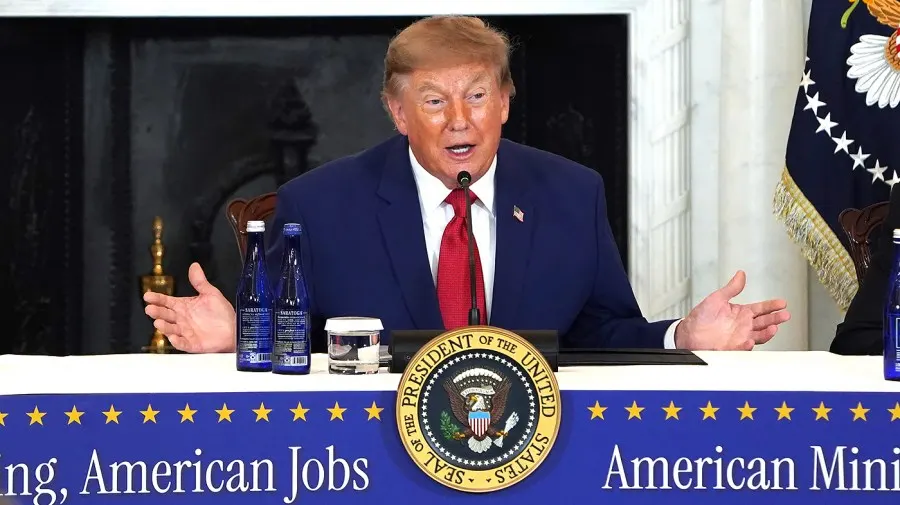
President Trump announced more than $2 billion in funding and investments for critical-minerals projects, alongside $180 million for mining education and workforce training. The measures are intended to expand US supplies of minerals used in batteries, advanced technology and defence equipment, reducing reliance on China, which dominates much of the sector’s mining and processing.
The largest commitment is a $1.4 billion loan to Sila Nanotechnologies for a lithium-battery plant, while Niron Magnetics will receive $150 million to expand rare-earth-free magnet production. A further $400 million is earmarked for Sunrise Energy Metals’ scandium mine in Australia; the administration says skills shortages among engineers, geologists, miners and technicians also constrain efforts to increase production.
- Trump pledged over $2 billion for critical-minerals projects.
- Funding targets lithium batteries, magnets and an Australian scandium mine.
- $180 million will support mining education and workforce training.
New here? Start with this
Critical minerals are raw materials used in products such as batteries, electronics and defence equipment. Lithium is used in batteries, while some rare earths are used to make powerful magnets. Mining and processing these materials are concentrated in a small number of countries, with China a major supplier.
The US government has sought to build up domestic supplies and reduce reliance on imports. The projects involve companies working on battery materials, magnets and mineral extraction, including an Australian mine; the funding combines loans and other investment with support for training workers. The effort matters because expanding production depends both on access to minerals and on people with the skills to mine and process them.
Both sides, in good faith
The strongest fair case each way — we don't pick a winner.
The case for
Reducing reliance on China for critical minerals is essential to national security and economic resilience, particularly for defence, technology and clean-energy sectors. These targeted investments address genuine market failures—the high upfront capital costs and shortage of skilled engineers and geologists that discourage purely private investment. Strategic government support builds domestic capacity, creates skilled employment, and ensures supply-chain stability that protects manufacturing competitiveness and technological independence.
The case against
Whilst reducing import dependence has merit, directing billions to specific mining projects raises legitimate questions about fiscal efficiency and environmental stewardship. Mining operations carry substantial ecological costs including habitat loss, water contamination and waste management challenges that may not be adequately weighed against industrial gains. Market competition and price signals are more reliable mechanisms for driving innovation in materials, recycling and alternatives; substantial public funds might achieve greater returns invested in foundational research, workforce education or infrastructure that benefit multiple industries rather than backing particular ventures.