World news and discussion on TalkFuse.
[seagull] review – silence proves golden in innovative if puzzling shot at Chekhov
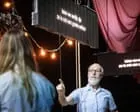
This inventive Edinburgh festival adaptation of Chekhov’s The Seagull uses Flemish and British Sign Language to make familiar material feel immediate and physically charged. Its near-silence, broken by breath, anguish, gunshots and occasional speech or music, gives the production unusual force and highlights the expressive power of its mixed D/deaf and hearing cast.
Directed by Stijn Van Opstal for Belgian companies Toneelhuis and Olympique Dramatique, the two-and-a-half-hour production begins with 30 minutes of signing supported by screen translations. Strong performances, especially from Yana Wuytjens as Konstantin, Sofie Decleir as Arkadina and Lobke Leirens as Masja, are offset by an excess of theatrical devices; the reviewer finds some freezes, surtitles and the title’s square brackets confusing and unexplained.
In short
- Sign-language Chekhov feels startlingly fresh and powerful.
- Expressive performances overcome much of the production’s puzzlement.
- Too many theatrical tricks dilute its strongest moments.
Explained simply
Anton Chekhov’s The Seagull is a play about artists, love and family tensions at a country estate in Russia. Its characters include the aspiring writer Konstantin, his actress mother Arkadina, and the young actor Nina, whose ambitions and relationships shape the story.
This adaptation is directed by Stijn Van Opstal for Belgian theatre companies Toneelhuis and Olympique Dramatique. It brings together D/deaf and hearing performers, using Flemish and British Sign Language alongside occasional speech and music.
Sign languages are full languages, with their own grammar and ways of conveying meaning through movement and expression. The production’s use of signing and near-silence puts communication at the centre of a play concerned with how people understand one another.