Science news and discussion on TalkFuse.
Rare turtle to be sent back home in 5,000-mile ‘incredibly emotional’ trip
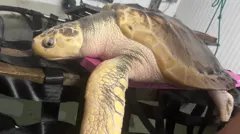
Rhossi, a rare Kemp’s ridley sea turtle rescued from an Anglesey beach, is being flown about 5,000 miles back to the Gulf of Mexico after more than two years of rehabilitation. The return is significant because Kemp’s ridleys are the world’s rarest sea turtles, and conservationists hope releasing him will contribute, however modestly, to the species’ survival in the wild.
The turtle was found barely alive near Rhosneigr in December 2023 after becoming cold-stunned in unusually cold waters, likely after losing his way in warmer seas. Anglesey Sea Zoo nursed him from under 1kg to 21kg, and has arranged a temperature-controlled crate, helicopter transfer to London and cargo flight to Houston; staff must keep his shell, skin and eyes moisturised throughout the journey. Rhossi is the zoo’s fourth rehabilitated turtle in a decade, and staff are planning a dedicated rescue centre for further cold-stunned turtles found around Wales.
In short
- Rescued Welsh turtle Rhossi is returning to the Gulf of Mexico.
- He was rehabilitated for more than two years after cold-stunning.
- His release may aid conservation of the rarest sea turtle.
Steelman: both sides, in good faith
The strongest fair case each way — we don't pick a winner.
The case for
Individual animal rescue efforts like Rhossi's demonstrate meaningful commitment to critically endangered species and preserve valuable genetic diversity that may prove crucial for population recovery. Every individual Kemp's ridley represents irreplaceable genetic material; successful rehabilitation and release provides hope and practical knowledge about what recovery is possible, whilst the emotional resonance of cases like this helps maintain vital public support for broader conservation efforts.
The case against
Whilst emotionally compelling, rescuing individual animals consumes substantial resources that might generate greater conservation impact if directed towards systemic solutions. Addressing root causes—climate change and altered ocean currents driving cold-stunning events, or commercial fishing practices killing far more turtles annually—would benefit the species more broadly and sustainably; individual rescue, however successful, cannot scale to population-level recovery and risks becoming an emotionally satisfying substitute for the more difficult, essential work of habitat preservation and climate action.
Explained simply
Kemp’s ridley turtles are a sea turtle species that lives mainly in the Gulf of Mexico and nearby parts of the Atlantic. They are considered the rarest sea turtles in the world, and their numbers have been affected by threats including fishing and changes to their nesting beaches.
Sea turtles depend on warm water, so a sudden drop in temperature can leave them cold-stunned: weak and unable to swim properly. Rescued turtles may need months or years of care before they can return to the sea, and specialists aim to release them where they naturally live.
Wildlife rescue teams and conservationists work to treat stranded turtles and support the survival of their species. Releasing a rehabilitated turtle cannot by itself change the outlook for a whole population, but it can return an individual to the wild and help experts learn more about caring for others.