What it’s like to chase solar eclipses around the world
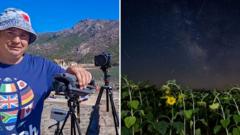
Astronomy enthusiasts from multiple continents are converging on the path of a total solar eclipse crossing Europe this week, with some having invested months of planning and travelled vast distances to position themselves for optimal viewing. One British photographer spent two days driving to Spain with specialised camera equipment, whilst American visitors flew to Iceland and hired accommodation in advance to reach remote areas where the moon will fully block the sun.
The appeal of chasing eclipses lies partly in their rarity—Europe hasn't experienced a total eclipse in over 25 years—and partly in the profound sensory experience observers report. Those who have witnessed previous eclipses describe an almost compelling draw to repeat the experience, pointing to the sudden darkness at midday, the abrupt silence from wildlife, and the sheer spectacle as reasons for their dedication despite totality lasting only minutes.
- A total solar eclipse crosses Europe this week, drawing enthusiasts who have travelled thousands of miles and prepared for over a year to witness the rare phenomenon
- Eclipse chasers describe the experience as deeply compelling despite totality lasting only minutes, citing the combination of natural drama and scarcity that drives their pursuit
New here? Start with this
Astronomy enthusiasts follow the moon's shadow around the globe to witness total solar eclipses, rare events in which the moon passes directly between the Earth and the sun, briefly blocking sunlight entirely for a small area of the planet. This week's eclipse is crossing parts of Europe, an area that has not seen a total eclipse in more than 25 years, drawing dedicated observers from as far afield as Britain and the United States.
These "eclipse chasers" often plan trips months in advance, travelling long distances and carrying specialist equipment to reach places along the narrow path where the total eclipse will be visible. Their motivation tends to be the unusual experience it offers: for a few minutes, day briefly turns to night, temperatures drop and animals often fall silent, before normal daylight returns.
The phenomenon matters both as a shared scientific and cultural event, giving researchers and the public alike a rare chance to observe the sun's outer atmosphere, and as a magnet for tourism in the towns and regions that happen to lie along the eclipse's path.