Mount Toba eruption doesn’t seem like it could nearly kill our species
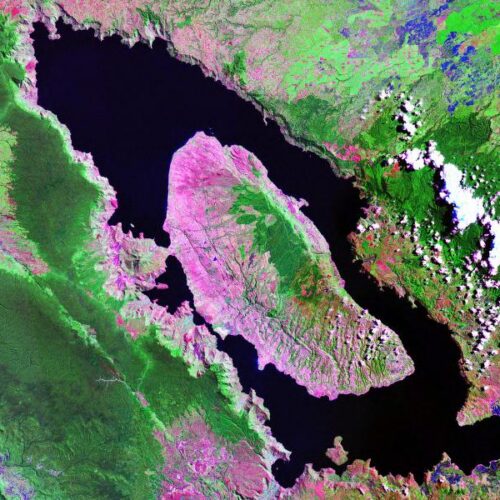
New research suggests the colossal Mount Toba volcanic eruption around 74,000 years ago, long theorised to have nearly wiped out early humans through a prolonged "volcanic winter", actually caused far milder and shorter-lived cooling than previously feared. Geoscientist Jinheum Park and colleagues from Johannes Gutenberg University in Mainz examined sediment from Lake Chala, a crater lake on the Kenya-Tanzania border, and found the eruption's climatic effects lasted under two years and caused roughly half a degree of cooling, undermining the "near-extinction event" hypothesis for human ancestors.
Toba, on what is now Sumatra, remains the largest volcanic eruption of the past 2.6 million years, expelling thousands of cubic kilometres of magma in about two weeks, some thousand times more than Mount Pinatubo's 1991 eruption. Previous attempts to gauge its climatic impact relied on sulphur emission estimates and standard sediment cores, both of which produced wildly inconsistent results because ordinary seafloor or lake sediments mix material across years, making short, sharp events hard to date precisely. Lake Chala's oxygen-starved, current-free depths instead preserve distinct annual sediment layers, or varves, similar to tree rings, giving researchers an unusually high-resolution record with which to pin down the eruption's true, more modest climatic toll.
- Mount Toba's 74,000-year-old eruption caused milder cooling than long assumed.
- Lake Chala sediment layers gave scientists a high-resolution climate record.
- Cooling lasted under two years, around half a degree, not a global catastrophe.