World news and discussion on TalkFuse.
British Columbia wildfire prompts 20,000 evacuations amid record Canadian fire season
Developed over time first seen 3 months ago
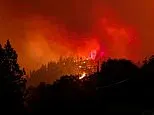
Reporting on Canada's record 2026 wildfire season has highlighted how residents in remote and Indigenous communities are increasingly organising their own firefighting responses rather than relying solely on official crews, as authorities struggle to keep pace with hundreds of simultaneous blazes. In British Columbia, wildfire specialist Sonja Leverkus has trained more than 400 residents around Fort Nelson over three years through a volunteer group, the Northeast BC Rural Incident Management Team, teaching people to respond before professional crews can arrive. In Ontario, Gull Bay First Nation councillor Hubert Wigwas defied evacuation orders to protect his community, fitting sprinklers to his roof and checking on elders who also stayed, and has since called for First Nations to set up their own coordinated wildfire response systems.
More than 750 wildfires were burning across Canada as of early August, including around 115 in British Columbia and over 150 in northwestern Ontario, with one BC blaze forcing roughly 20,000 people to evacuate. Smoke from the fires spread as far as the US Midwest, prompting US President Donald Trump to threaten further tariffs over what he called "filthy, polluted" air crossing the border. Wigwas risked a fine of around C$800 (£425) by remaining in his home, while officials, including Ontario's ministry of natural resources, maintained they were in constant contact with First Nations leaders and directed resources according to fire behaviour and community risk.
- Sources
- 2
- Outlets
- 2
- Left · Centre · Right
- 0 · 1 · 1
In short
- Canada battles over 750 wildfires; BC blaze forces 20,000 evacuations
- Remote and Indigenous communities are training residents to fight fires themselves
- Smoke reached the US Midwest, prompting Trump tariff threats over air quality
How this story developed
- 3 months ago Further reporting added historical context by noting 2023 remains Canada's worst fire season on record, when blazes scorched an area comparable in size to Syria, while confirming the current toll of 115 BC fires and over 150 in northwestern Ontario and reporting that Wigwas said no outside fire crews had reached his community.
- 3 months ago Coverage narrowed to focus on a single explosive BC blaze that had rapidly torn through drought-stricken land and forced roughly 20,000 residents to flee, framing it as one flashpoint within the broader crisis of over 750 fires in which Indigenous leaders such as Wigwas continued refusing official evacuation orders to defend their homes.
- 3 months ago Fresh reporting on Canada's unprecedented 2026 wildfire season revealed that residents in remote and Indigenous communities are increasingly mounting their own firefighting efforts, with BC specialist Sonja Leverkus having trained over 400 volunteers near Fort Nelson and Gull Bay councillor Hubert Wigwas defying evacuation orders in Ontario, as more than 750 fires burned nationwide and smoke drifting into the US Midwest drew a tariff threat from President Trump.
Where outlets differ
Centre outlets 1
Only here: afraid, stay, taking, fighting, wildfires
Right-leaning outlets 1
Only here: raging, wildfire, erupted, like, bomb
Every side used: canadians
Headline columns compared word for word; nothing in them is AI-written.
Explained simply
Canada is in the middle of one of its most intense wildfire seasons on record, with several hundred fires burning across the country at once. British Columbia and Ontario have been particularly badly hit, with major blazes forcing thousands of people from their homes, including a large evacuation order affecting around 20,000 residents in BC.
Many of the areas worst affected are remote or Indigenous communities, where official firefighting crews are often stretched thin or slow to arrive. In some places, residents have begun organising their own emergency responses, setting up volunteer teams trained to act before professional help gets there, while others have chosen to stay behind against evacuation orders to protect homes and vulnerable neighbours.
The scale of this year's fires echoes 2023, Canada's worst season on record, when smoke drifted far beyond its borders and affected air quality across parts of the United States. That cross-border impact has again become a point of friction, feeding into wider debates about wildfire management, resourcing for isolated communities, and how governments prepare for increasingly severe fire seasons.
Coverage · 2 sources
Bias meters
From 2 rated sources.