When and where to see the solar eclipse in London
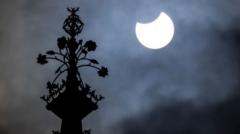
Londoners will experience a significant astronomical event on Wednesday, 12 August, when the Moon passes in front of the Sun, obscuring approximately 90 percent of it. This partial eclipse represents the most substantial coverage visible from the United Kingdom since 1999. The event will commence at 18:17 BST, reach peak obscuration around 19:12 BST, and conclude by approximately 20:06 BST. Observers will notice changes in ambient light and temperature, though the sky will not become completely dark as occurs during a total eclipse. Following this event, the UK must wait until 2050 to witness another comparably significant partial eclipse, with the next total solar eclipse over British skies not expected until 2090.
Viewing the eclipse safely is paramount, as direct observation can cause permanent eye damage. Certified ISO 12312-2 eclipse glasses are essential protective equipment, as standard sunglasses provide insufficient filtering against harmful solar radiation. Alternative indirect viewing methods include constructing a pinhole projector or using a kitchen colander to project eclipse images. Optimal viewing locations in London include elevated open spaces with clear westward sightlines, such as Telegraph Hill, Primrose Hill, Parliament Hill, Alexandra Palace, Crystal Palace Park, and Greenwich Park, several of which are hosting organised public observation events.
- Partial eclipse on 12 August will obscure ~90% of the Sun from London—the most significant UK event since 1999
- Safe viewing requires ISO-certified eclipse glasses; unobstructed elevated spaces with western views offer optimal observation
- Multiple public viewing events scheduled; next comparable UK eclipse won't occur until 2050
New here? Start with this
Wednesday evening will see the UK's biggest partial solar eclipse since 1999, as the Moon crosses in front of the Sun and blocks around 90 percent of its light as seen from London. Unlike a total eclipse, the sky will not go fully dark, but people can expect the light to dim and the temperature to drop for a while during the event.
A solar eclipse happens when the Moon lines up between the Earth and the Sun, casting a shadow over parts of the planet. How much of the Sun gets covered depends on where you are, and London is set for a particularly deep partial eclipse this time, which is why it is drawing so much attention. Events of this scale are rare in Britain, and the next one on a similar level is not expected until 2050.
Looking directly at the Sun, even during an eclipse, can cause serious and permanent eye damage, so proper protection matters. This has made safe viewing, using certified eclipse glasses or simple projection methods rather than the naked eye, a central part of the guidance around the event, alongside advice on where in London to get a good, unobstructed view.