Space Agencies Are Trying to Keep Astronauts From Losing Their Sight
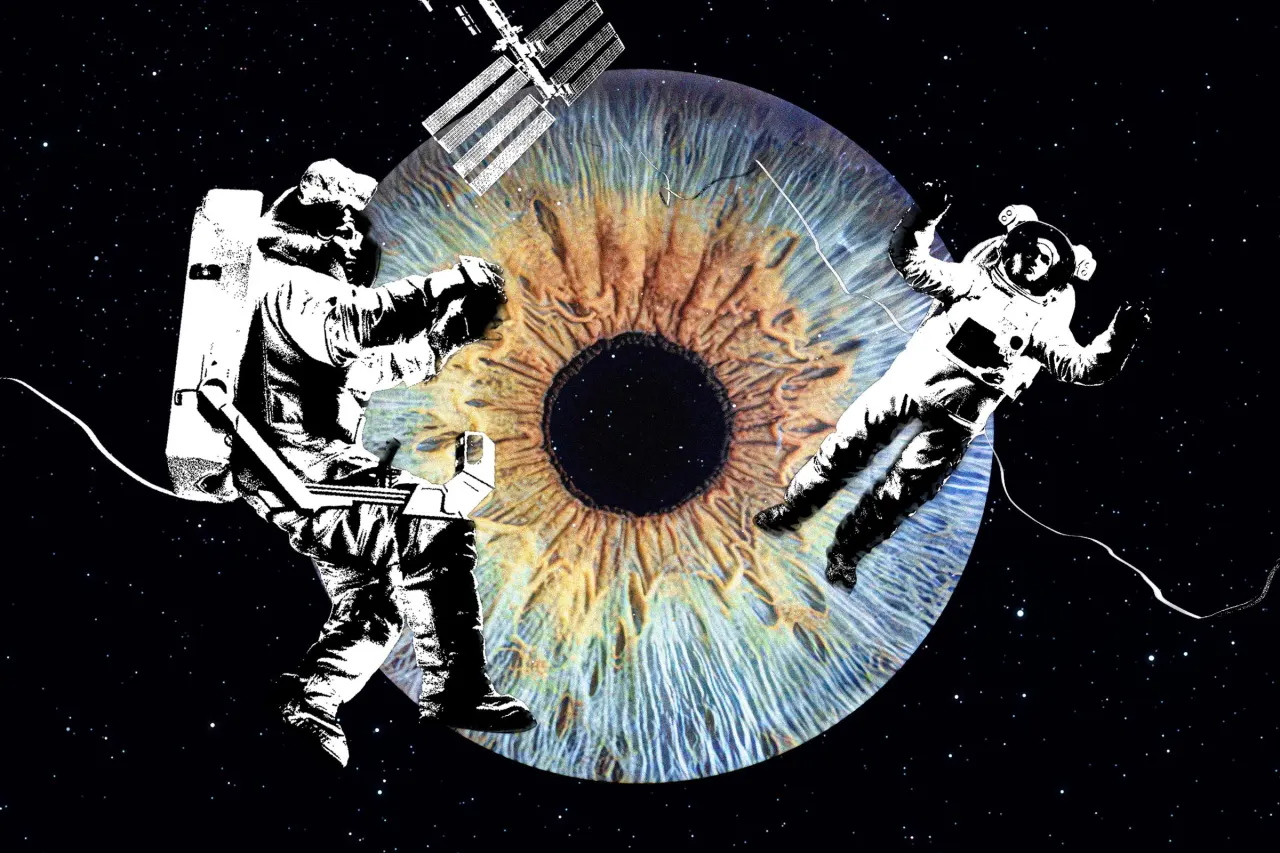
The European Space Agency has commissioned British startup Siloton to develop a compact eye-scanning device to help understand and eventually treat spaceflight-associated neuro-ocular syndrome (SANS), a condition that damages astronauts' eyesight during long missions. The work is being done ahead of the Artemis programme's crewed missions to the moon and other deep space journeys, where growing communication delays with Earth will make existing monitoring methods impractical.
SANS affects around 70 percent of astronauts aboard the International Space Station, caused by bodily fluid pooling in the head in low gravity, which squashes the eyeballs and swells the optic nerve; NASA astronaut John Phillips' vision dropped from 20/20 to 20/100 during a six-month mission in 2005. Siloton, founded by physicists in 2020 and already working with the NHS on home retinal scanning, uses quantum technology to shrink optometry equipment onto a coin-sized photonic chip, allowing astronauts to scan their own eyes frequently without ground support. Engineers still face challenges including avoiding battery fire risks and designing equipment that works without gravity to hold an astronaut's head steady.
- ESA backs Siloton's compact eye scanner to combat astronaut vision loss.
- SANS affects roughly 70% of ISS astronauts on long missions.
- Device aims to enable self-scanning ahead of deep space Artemis missions.
New here? Start with this
SANS is a condition first noticed among astronauts on long space missions, where fluid shifts towards the head in low gravity, putting pressure on the eyes and optic nerve. It affects a large majority of those who spend extended periods aboard the International Space Station, and in some cases has caused significant, lasting changes to their eyesight. As space agencies plan longer missions further from Earth, understanding and managing this problem has become a priority.
The European Space Agency and NASA are the main organisations involved, alongside Siloton, a British company that builds compact eye-scanning technology. Their work is partly driven by NASA's Artemis programme, which aims to send astronauts back to the moon and eventually further into deep space, journeys where doctors on Earth will not be able to monitor crew members in real time as they do now.
The core challenge is building medical equipment that is small, reliable and usable by astronauts themselves without expert help nearby, while also coping with the practical difficulties of operating in an environment without gravity. How this problem is solved matters not just for astronaut health, but for the broader feasibility of extended human space exploration.