Politics news and discussion on TalkFuse.
Netanyahu’s rejection of Trump’s 15-point Gaza plan unlikely to be final word
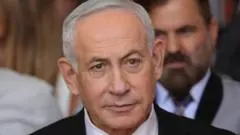
Israeli Prime Minister Benjamin Netanyahu has formally rejected the US-backed 15-point "Board of Peace" roadmap to disarm Hamas in Gaza, telling his cabinet that Israel would not withdraw its forces until all Hamas weaponry, heavy and light, is genuinely decommissioned. However, the rejection is unlikely to be the last word on the matter, as the White House has reportedly not been troubled by the statement, viewing it as political posturing ahead of a heated Israeli general election due in October.
A senior US official was quoted as saying Washington understood Netanyahu's political needs and had no issue with the rejection provided he continued to restrain attacks in Gaza, and recent days have indeed seen an apparent pause in Israeli strikes, one of Hamas's conditions for accepting the plan. Trump announced the disarmament agreement in July as a "major milestone", with Hamas conditionally on board and the EU and UK welcoming it, though Israel had withheld formal approval for over a week amid objections from figures including far-right minister Itamar Ben-Gvir. Despite Netanyahu's rejection, preparations for deploying an International Stabilisation Force reportedly continue, with construction of its first base in Rafah still expected to begin by the end of the month.
In short
- Netanyahu rejects Trump's 15-point Gaza disarmament plan outright
- White House sees this as pre-election rhetoric, not a real block
- ISF base construction in Rafah still expected to proceed this month
Steelman: both sides, in good faith
The strongest fair case each way — we don't pick a winner.
The case for
The 15-point roadmap, backed by the US, EU and UK with conditional Hamas support, provides an internationally monitored framework for disarmament and force withdrawal that addresses Israel's security concerns whilst enabling reconstruction and ending military occupation. Supporting it would align Israel with its key allies and demonstrate commitment to a negotiated settlement; the alternative of indefinite military presence risks prolonged conflict and strains with crucial partners.
The case against
Israel cannot rely on international verification mechanisms to guarantee that Hamas will not rebuild weapons and capabilities, particularly given the organisation's documented ability to circumvent oversight and rearm. Maintaining direct Israeli control and verification until complete disarmament is verifiable protects against unacceptable security risks; accepting predetermined force-withdrawal timelines without such assurance would be strategically unsound regardless of international agreement structures.
Explained simply
The conflict in Gaza centres on Israel and Hamas, the Palestinian group that has governed the territory and has an armed wing. Israel says it wants Hamas disarmed and has kept troops in Gaza during the war; the status of those forces and the weapons are central to any ceasefire arrangement.
A US-backed roadmap, announced by Donald Trump, links disarmament to steps such as an Israeli withdrawal and an international force to help stabilise Gaza. Hamas has indicated conditional support, while Israel’s government has raised objections; the European Union and the UK have welcomed the plan.
The issue matters because the terms could shape security and governance in Gaza after the fighting, as well as the prospects for a lasting ceasefire. Netanyahu also faces domestic political pressures, with an Israeli general election due in October.
Elections Government Middle East Politics World