Culture news and discussion on TalkFuse.
Best places to see partial solar eclipse across England
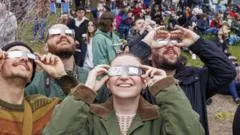
People across England will have a rare opportunity to view a dramatic partial solar eclipse on 12 August, when the Moon will block between 90% and 96% of the Sun—the greatest coverage seen since the total eclipse of 1999. The South West of England is expected to see the highest level of coverage in the country, while a full total eclipse will be visible further afield in parts of Greenland, Iceland and northern Spain. Numerous events are being held nationwide to mark the occasion, alongside guidance on how to watch safely.
The eclipse will last around one hour and 50 minutes, running from approximately 18:20 to 20:10 BST, though exact timings will vary by location. Viewers are urged to avoid looking directly at the Sun or using ordinary sunglasses, and instead to use genuine eclipse glasses meeting the ISO 12312-2:2015(E) safety standard, or indirect methods such as pinhole viewers, projecting the Sun through a colander, or a homemade pinhole projector.
In short
- Partial solar eclipse visible across England on 12 August
- Moon will cover up to 96% of the Sun, most in South West
- Use certified eclipse glasses or pinhole projectors, not sunglasses
Explained simply
A solar eclipse happens when the Moon passes between Earth and the Sun, covering some or all of the Sun from view. In a partial eclipse, the Moon covers only part of the Sun; how much is hidden depends on where you are.
The Moon’s shadow crosses different parts of Earth, so a total eclipse can be seen in some places while other areas see only a partial one. In England, the amount of the Sun covered will vary by location, with the South West expected to see the most.
Because the Sun can damage eyesight, watching an eclipse safely requires proper eclipse glasses or a way to view the Sun’s image indirectly. Ordinary sunglasses do not provide enough protection.
Art Culture Geopolitics Politics Science Space Technology UK World