Syrian court sentences Bashar al-Assad to death in absentia
Developed over time first seen 2 months ago
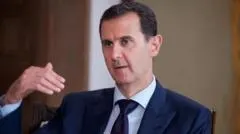
A Syrian court has sentenced ousted leader Bashar al-Assad to death in absentia after convicting him of war crimes and crimes against humanity committed during Syria's civil war, marking the first formal legal judgment against him. Assad fled Damascus for Moscow in December 2024 as his family's five-decade rule collapsed under a rapid offensive led by forces now headed by President Ahmed al-Sharaa. The ruling forms part of a wider push by Syria's interim government to prosecute regime figures, though securing custody of senior officials sheltering in Russia remains uncertain.
Also sentenced to death were Assad's cousin Atef Najib, a former security chief convicted of murder and torture who appeared in court in a prison uniform, and Assad's brother Maher, who commanded the army's Fourth Division, alongside former defence minister Fahd al-Freij and other officials tried in absentia. The case is tied to the 2011 crackdown in Deraa, widely seen as the spark for the uprising that grew into a war killing hundreds of thousands. Outside court, crowds celebrated the verdict as a step towards justice, though an arrest warrant issued in December 2025 has yet to be matched by any extradition from Russia.
- Assad sentenced to death in absentia for war crimes, crimes against humanity
- Cousin Atef Najib also sentenced to death, appeared in court
- Extradition from Russia for Assad and brother Maher remains unresolved
New here? Start with this
Syria's civil war began in 2011, when Bashar al-Assad's government responded to anti-government protests with a violent crackdown that escalated into more than a decade of conflict. Hundreds of thousands of people were killed and millions displaced, with Assad's forces accused of widespread abuses including chemical weapons attacks, mass detentions and torture in state prisons. His family had ruled Syria since his father, Hafez al-Assad, seized power in 1970.
Assad's rule ended in December 2024, when rebel forces swept across the country and toppled his government, prompting him to flee to Russia, where he has remained under Moscow's protection. A new interim government has since taken charge in Damascus and begun pursuing legal cases against former officials linked to abuses committed during the war, as part of a broader push to establish accountability for the old regime.
This case matters because it is the first time a Syrian court has formally convicted Assad himself, even though he was tried without being present and is unlikely to face punishment while he remains in Russia. The ruling raises wider questions about whether other senior figures from his government, some also sentenced in absentia, could ever be brought to justice, and about Syria's efforts to reckon with the war's legacy.
Both sides, in good faith
The strongest fair case each way — we don't pick a winner.
The case for
Supporters of the verdict argue that formal accountability is essential after decades of documented atrocities, including torture, mass detentions and chemical weapons attacks, and that a legal judgment, even delivered in absentia, creates an official record and begins to deliver justice to victims and their families who have waited years for acknowledgement. They contend that prosecuting former officials upholds the principle that no one, however powerful, is above the law, and may discourage future abuses by showing that impunity has limits. Many also see such trials as a necessary foundation for genuine national reconciliation, arguing that a society cannot move past civil war without first confronting and formally condemning the crimes committed against it.
The case against
Critics, without disputing the seriousness of the alleged crimes, raise concerns about trials held in absentia by a still-consolidating interim government, questioning whether defendants had any real opportunity to mount a defence or whether the proceedings meet recognised fair-trial standards. Some worry that a new administration prosecuting its predecessors risks being perceived as victor's justice rather than impartial law, which could deepen political or sectarian divisions instead of healing them. Others object to the use of capital punishment itself, arguing that executions, even symbolic ones against absent defendants, foreclose the kind of truth-and-reconciliation process that has helped other post-conflict societies build lasting peace, and that verdicts with little realistic prospect of enforcement risk appearing more symbolic than substantive.
More coverage
Government Middle East Politics World
Read the full article at the source →
Originally published by BBC World as “Ousted Syrian dictator Bashar al-Assad sentenced to death in absentia”.