Former judge removed by Orbán elected Hungarian president
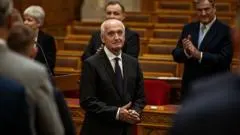
Hungary's parliament has elected András Baka, a 73-year-old former Supreme Court chief justice, as the country's new president, replacing Tamás Sulyok, who was ousted last month. The role is largely ceremonial, but Baka's tenure is expected to be significant as he will oversee Prime Minister Péter Magyar's efforts to dismantle the political and economic structures built by former Prime Minister Viktor Orbán, as well as the drafting of a new constitution to replace the one Orbán introduced in 2011.
Baka, who spent 17 years as Hungary's judge at the European Court of Human Rights, was elected by 140 votes to six after all 51 MPs from Orbán's Fidesz party walked out in protest. Notably, it was Fidesz that removed Baka from his post as Supreme Court president in 2011 after he opposed their undermining of judicial independence. Since taking office in May, Magyar's government has passed 27 laws and two constitutional amendments, scrapping Orbán-era states of emergency, abolishing the Sovereignty Protection Office and limiting future prime ministers and MPs to fixed term limits. Baka, describing himself as not a political man, has said he opposes some of these term limits and is expected to serve as a transitional figure for up to five years until a new constitution is adopted.
In short
- Former judge András Baka elected Hungarian president, replacing Orbán ally Sulyok
- He will oversee dismantling of Orbán's political legacy and new constitution
- Fidesz MPs walked out in protest; Baka was once removed from post by Orbán
Steelman: both sides, in good faith
The strongest fair case each way — we don't pick a winner.
The case for
Advocates of these reforms point to years of democratic deterioration under Orbán, including the deliberate undermining of judicial independence that led to Baka's removal in 2011. They argue that restoring institutional safeguards and rule of law is fundamental to democratic renewal, and Baka's proven commitment to judicial independence and human rights makes him a trustworthy steward of constitutional protections. The broad parliamentary consensus backing these changes reflects democratic legitimacy for necessary institutional renewal after significant damage.
The case against
Those cautious about this direction raise legitimate concerns about the pace and scope of constitutional change without building sufficiently broad consensus. Whilst institutional reforms may be necessary, they contend that wholesale constitutional replacement pursued in months risks creating instabilities and frameworks vulnerable to future reversal, and that durable constitutional systems typically require public deliberation and cross-party consensus beyond simple parliamentary majorities. This reflects a principle that constitutional renewal requires democratic legitimacy beyond urgent political change.
Explained simply
Hungary’s president is head of state, but the role is mostly ceremonial. The president can have a part in signing laws and other formal duties, while the prime minister leads the government. András Baka is a former senior judge who also served at the European Court of Human Rights.
Viktor Orbán’s Fidesz party governed Hungary for years and introduced a new constitution in 2011. The party removed Baka as Supreme Court president that year after he objected to changes affecting judicial independence. Prime Minister Péter Magyar’s government is now changing laws and institutions built during Orbán’s time in office.
Baka is expected to serve during a transition, including while a replacement constitution is prepared. His presidency matters because it connects the formal head-of-state role with a period of major legal and political change.