Women’s football shouldn’t be penalised by Uefa boycott – Nandy
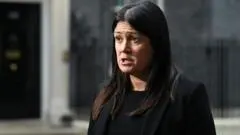
Culture Secretary Lisa Nandy has said women's footballers should not be "penalised" by a potential Uefa boycott of next month's Under-20 Women's World Cup, as tournament hosts Poland report no notice of any withdrawals. Uefa and its 55 member associations have threatened to boycott Fifa competitions in protest at president Gianni Infantino's plan to sell stakes in the World Cup to private investors, raising the prospect that a major women's youth tournament could be caught up in a dispute rooted in the men's game.
The Under-20 Women's World Cup is due to be held in Poland from 5-27 September, with Uefa nations including England, Italy, Spain, Portugal and France all set to compete. The Polish Football Association said it had received no information about any team withdrawing, and both France and Portugal have indicated their squads are continuing preparations as planned, while England have yet to confirm their participation. Nandy said she wants Infantino to resign over the proposal but does not support boycotts in general, arguing they "unfairly penalise athletes" not responsible for the dispute, and called instead for a change of leadership and a clear message that the women's game should not suffer as a result.
- Nandy opposes a Uefa boycott hitting the Under-20 Women's World Cup
- Poland says no teams have withdrawn ahead of September's tournament
- Nandy wants Infantino to resign over his World Cup stake-sale plan
Both sides, in good faith
The strongest fair case each way — we don't pick a winner.
The case for
Those supporting a principled boycott argue that Fifa's governance cannot be compromised without serious consequences, even if women's competitions are temporarily affected. They contend that allowing Infantino's privatisation scheme to proceed unchallenged would damage football's institutional integrity far more severely in the long term, and that a firm stand now—despite the inconvenience to young athletes—is necessary to prevent worse outcomes. Without real costs to non-compliance, significant governance reform becomes impossible.
The case against
Those opposing the boycott, including Nandy, argue that young female athletes should not be penalised for disputes they did not create and cannot control. The women's game is at a critical stage of growth and investment; a boycott risks undermining this progress and sets a troubling precedent of using athletes as political leverage. Instead, they advocate for alternative mechanisms to challenge Infantino—votes, governance reforms, leadership change—that do not require harming the sport's development at ground level.