Entertainment news and discussion on TalkFuse.
‘I chase eclipses around the world’
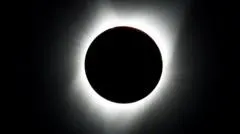
Dr Chris Riley says witnessing the 1999 total solar eclipse from Alderney was a life-changing experience that led him to become a part-time eclipse chaser. The event mattered both as a memorable scientific spectacle and as a major BBC broadcast, bringing the phenomenon to millions of viewers.
Riley had originally expected to watch from Cornwall but was sent to Alderney, the final location in the British Isles to see totality, where he joined broadcaster Jamie Theakston and 250 astronomers. He described seeing darkness sweep across the water at about 2,000 miles per hour and has since travelled to eclipses in Zambia, the Faroe Islands and the United States, while preparing for one in Spain.
In short
- Alderney’s 1999 eclipse inspired Riley’s global travels.
- BBC’s broadcast attracted 13 million viewers.
- Riley has since observed eclipses worldwide.
Explained simply
A solar eclipse happens when the Moon passes between the Earth and the Sun, briefly blocking the Sun from view. In a total eclipse, the Moon covers the Sun completely for people in a narrow strip of the Earth, called the path of totality; outside it, viewers see only a partial eclipse.
The 1999 eclipse crossed parts of Europe, including the British Isles, and drew attention from scientists and broadcasters. Dr Chris Riley watched from Alderney alongside broadcaster Jamie Theakston and astronomers. Eclipse chasers travel to different places to stand in the path of totality, where the brief change from daylight to darkness can be seen.