Politics news and discussion on TalkFuse.
How the West watched most historic solar eclipse since 1999
Developed over time first seen 3 months ago
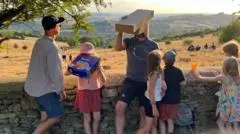
Thousands of people across the West of England gathered on Wednesday evening to watch a partial solar eclipse, with more than 90% of the Sun obscured by the Moon. It was the greatest solar coverage visible from the UK since the total eclipse in 1999, making it a notable once-in-a-generation event.
Crowds assembled at locations including Bristol’s Clifton Downs and Trooper’s Hill, Cleeve Hill near Cheltenham, Weston-super-Mare beach, Bath, Cheddar Reservoir, Stonehenge and Warminster. People used certified eclipse glasses as well as improvised viewing methods such as cereal boxes, colanders and a welding mask, while astronomy groups organised public observing events.
- Sources
- 2
- Outlets
- 1
- Left · Centre · Right
- 0 · 2 · 0
In short
- Western England watched its deepest solar eclipse since 1999.
- More than 90% of the Sun was obscured.
- Crowds used glasses and improvised viewing devices.
How this story developed
- 3 months ago Thousands of people across the West of England gathered on Wednesday evening to watch a partial solar eclipse, with more than 90% of the Sun obscured by the Moon.
Explained simply
A solar eclipse happens when the Moon passes between Earth and the Sun, blocking some or all of the Sun from view. In a partial eclipse, the three bodies do not line up exactly, so the Moon covers only part of the Sun.
How much of the Sun appears covered depends on where an observer is on Earth. The 1999 eclipse was total along a narrow path across parts of the UK, while the event described here was partial; its high coverage made it the most substantial visible from the UK since then. People use specially certified eclipse glasses or safe projection methods to observe an eclipse, because looking directly at the Sun can damage eyesight.
Coverage · 2 sources
Bias meters
From 2 rated sources.
Geopolitics Politics Science Space Technology