Entertainment news and discussion on TalkFuse.
Thousands of Lime bikes are left on the street as clean-up begins after skywatchers gathered to marvel at the solar eclipse
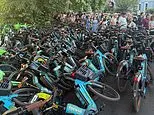
The morning after Britain witnessed its first proper solar eclipse since August 1999, streets in London and elsewhere were left strewn with abandoned Lime bikes and rubbish as spectators rushed to secure prime viewing spots. Millions watched the sun disappear behind the moon, with the partial eclipse beginning shortly after 6pm and maximum coverage occurring between roughly 7.05pm and 7.13pm depending on location, but the clean-up operation that followed highlighted the less glamorous side of the mass gathering.
Photos from popular spots such as Hampstead Heath and Primrose Hill showed rows of toppled e-bikes littering the pavements, while litter pickers in West Moors, Dorset, filled 13 bags of rubbish and a single collector in Hartlepool filled three more. A pub in Greater Manchester threatened to bar customers who left mess behind after a nature viewpoint was trashed. Separately, concerns emerged that eclipse glasses bought in bulk could end up in landfill, as their polymer-filter lenses cannot be recycled, while Google searches for "eyes hurt" rose 5,000 per cent as some viewers reported eye pain from looking directly at the sun.
In short
- Lime bikes and rubbish littered London streets after the solar eclipse
- Volunteers cleaned up mess at Hampstead Heath, Primrose Hill and beyond
- Eclipse glasses may go to landfill; some viewers reported eye pain
Explained simply
A solar eclipse happens when the moon passes between Earth and the sun, blocking some or all of the sun from view. In a partial eclipse, the sun appears partly covered; the amount visible depends on where you are. Special eclipse glasses are needed to watch safely, because looking directly at the sun can damage your eyes.
Lime runs a network of hire bikes, including electric bikes, that people can pick up and leave in the street through an app. Large crowds at popular viewing spots can leave pavements busy, and bikes or rubbish may be left behind. The clean-up also raises questions about how to dispose of single-use viewing glasses, whose lenses are not recyclable.