World news and discussion on TalkFuse.
Catholic priest who says church leaders left him homeless loses extraordinary Fair Work battle that reached the Vatican
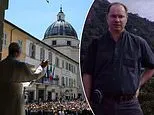
An Australian Fair Work commissioner has dismissed a Catholic priest’s claim against his religious order, ruling that he was not legally an employee. Father Wieslaw Pawlowski said church leaders left him homeless and destitute after changing the locks on his home and taking his car, following his refusal to comply with an order; the decision limits his ability to pursue the matter through workplace law.
The Polish-born priest spent nearly three years disputing the actions of the Society of Christ Fathers through church processes, including an appeal to Vatican authorities in Rome, before applying to Australia’s workplace tribunal. The tribunal found that his relationship with the order was religious rather than contractual employment, so it did not have jurisdiction over his claim.
In short
- Tribunal ruled the priest was not an employee.
- He alleged church leaders left him homeless.
- The dispute had previously reached the Vatican.
Steelman: both sides, in good faith
The strongest fair case each way — we don't pick a winner.
The case for
The priest worked for decades within the order and was suddenly left homeless and destitute when he questioned an instruction, with no support or due process. Though called a vocation, he performed labour, depended on the institution for housing and livelihood, and was subject to its authority, suggesting the substance of an employment relationship. Employment law protects vulnerable workers from such treatment; restricting his legal recourse on jurisdictional grounds allows religious institutions to avoid accountability for conduct that would be illegal for secular employers.
The case against
Religious orders rest on fundamentally different principles than secular employers—their members take vows and join spiritual communities rather than pursue economic contracts. The tribunal's jurisdiction properly distinguishes between contractual employment and religious community membership, a principle that respects religious freedom and the distinct nature of vocational commitment. Imposing secular employment law on religious communities would place secular tribunals as arbiters of internal religious matters that properly remain within ecclesiastical governance.
Explained simply
The Society of Christ Fathers is a Catholic religious order: a community whose members live and serve under the rules of their church. Priests in an order may be assigned duties and accommodation by its leaders, but that relationship does not automatically make them employees under Australian workplace law.
Father Wieslaw Pawlowski is a Polish-born priest who disputed decisions made by his order and pursued the matter through church channels, including an appeal to authorities in Rome. He later brought a claim to Australia’s Fair Work tribunal, which deals with workplace disputes and can hear cases only when the person bringing them falls within its legal remit.
The case raises the question of how disputes between religious orders and their members can be handled when the relationship is not legally classed as employment. That distinction affects whether workplace protections and remedies are available through the tribunal.