World news and discussion on TalkFuse.
Top White House official QUITS as Trump’s Iran war spirals out of control after chilling new attack
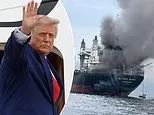
Andy Baker, White House deputy national security adviser and a close aide to Vice President JD Vance, is to resign in the coming weeks, according to Axios, as the conflict with Iran worsens. His departure follows renewed Iranian attacks on shipping in the Strait of Hormuz and comes only days after Press Secretary Karoline Leavitt announced her own resignation, adding to the sense of upheaval within Donald Trump's administration as the crisis drags on.
Baker had helped shape US foreign policy for 18 months and drafted the Memorandum of Understanding Iran signed in June, an agreement Tehran has since abandoned. Iran has launched drone strikes on tankers in the Strait, through which roughly a fifth of global oil passes, with traffic down to nine vessels on Thursday against a pre-war average of over 100 daily. Brent crude has risen to around $87 a barrel and US petrol prices exceed $4 a gallon, adding economic pressure on Trump ahead of the midterm elections. Baker said he was leaving on good terms, and Vance praised him as an "indispensable" member of the national security team.
In short
- Top Trump national security aide Andy Baker set to resign
- Comes amid escalating Iran conflict and Hormuz tanker attacks
- Oil prices and inflation rising ahead of US midterms
Steelman: both sides, in good faith
The strongest fair case each way — we don't pick a winner.
The case for
The Trump administration's Iran policy represents principled rejection of appeasement, as the abandoned MOU proves that diplomacy without strength fails to constrain Iranian aggression. Baker's departure reflects strategic realignment rather than policy failure, and accepting short-term economic costs is the necessary price of durably protecting American interests against Iranian belligerence.
The case against
The escalating crisis and wave of resignations suggest a failing strategy without viable resolution or diplomatic off-ramp. Rising oil prices and shipping disruptions inflict real costs on Americans and global markets, yet the administration appears trapped in an escalatory cycle driven by confrontation rather than any coherent long-term vision for stability.
Explained simply
The Strait of Hormuz is a narrow sea route between Iran and the Arabian Peninsula, linking the Gulf to the wider ocean. Around a fifth of the world’s oil normally passes through it, so disruption can affect energy supplies and prices well beyond the region.
The United States and Iran have a long-running dispute over security and Iran’s nuclear programme. A memorandum of understanding is a written outline of agreed intentions; the June agreement mentioned here was later abandoned by Iran. Andy Baker, a senior White House national security aide who helped shape US policy and draft that document, worked closely with Vice President JD Vance.
Higher fuel costs can affect household budgets and the wider economy, making the conflict a domestic political issue for Donald Trump’s administration as well as a foreign policy one. Changes among senior officials may also matter because they can alter who advises the president and how policy is made.