Science news and discussion on TalkFuse.
Vile rich kid, 18, set to swap ritzy enclave for PRISON after he admitted repeatedly kicking terrified sea lion that tried to get away from him
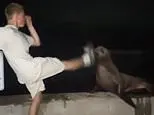
An 18-year-old from the wealthy San Diego suburb of La Jolla, California, has pleaded guilty in federal court to repeatedly kicking a sea lion, an offence under the Marine Mammal Protection Act, and now faces up to a year in prison. Tyler Muehl entered the plea agreement on Thursday after footage of the incident went viral, prompting condemnation from wildlife authorities who stressed that harming marine mammals is both illegal and dangerous to the animals involved.
The video, filmed on 22 June, showed Muehl adopting a boxing stance and kicking at the sea lion, which had been resting peacefully on a sea wall at La Jolla Cove around midnight, while friends laughed and one warned he might get bitten. He reportedly called himself "Max Holloway", after the real-life UFC fighter, as he approached the animal, which eventually fled over the wall to the beach. Muehl will be sentenced in October and could receive a fine of up to $100,000, in a neighbourhood where average household income is around $210,000.
In short
- La Jolla teen pleads guilty to kicking a sea lion four times
- Faces up to a year in prison, $100,000 fine
- Sentencing set for October; incident filmed and went viral
Steelman: both sides, in good faith
The strongest fair case each way — we don't pick a winner.
The case for
The case for substantial punishment emphasises that deliberate, sustained cruelty to protected wildlife—filmed for entertainment—warrants serious consequences to deter such conduct and signal that wildlife protection laws have real teeth. Without meaningful enforcement, such protections become merely aspirational. Deterrence, proportionality to the severity of the violation, and respect for the legal system's authority require that an eighteen-year-old understand there are genuine costs to flagrant lawbreaking.
The case against
The case for lighter punishment draws on criminological research showing rehabilitation more effective than incarceration for young offenders, particularly first-time offenders who plead guilty and show remorse. At eighteen, the prefrontal cortex remains developing; peer pressure influences behaviour in ways adults rarely experience. Substantial fines, community service, probation, and mandatory education on marine protection could achieve real accountability whilst preserving his life prospects—outcomes that incarceration would jeopardise.
Explained simply
Sea lions are protected marine mammals in the United States under the Marine Mammal Protection Act. The law makes it illegal to harm or harass them, and keeping a distance also helps avoid dangerous encounters between people and wildlife.
La Jolla Cove is a coastal area in San Diego where sea lions often rest on sea walls and beaches. Wildlife authorities say disturbing or injuring them can put the animals at risk, while a frightened sea lion may also bite or otherwise injure someone who gets too close.