Order of the Sinking Star puzzle game launches October with credit updates
Developed over time first seen 2 months ago
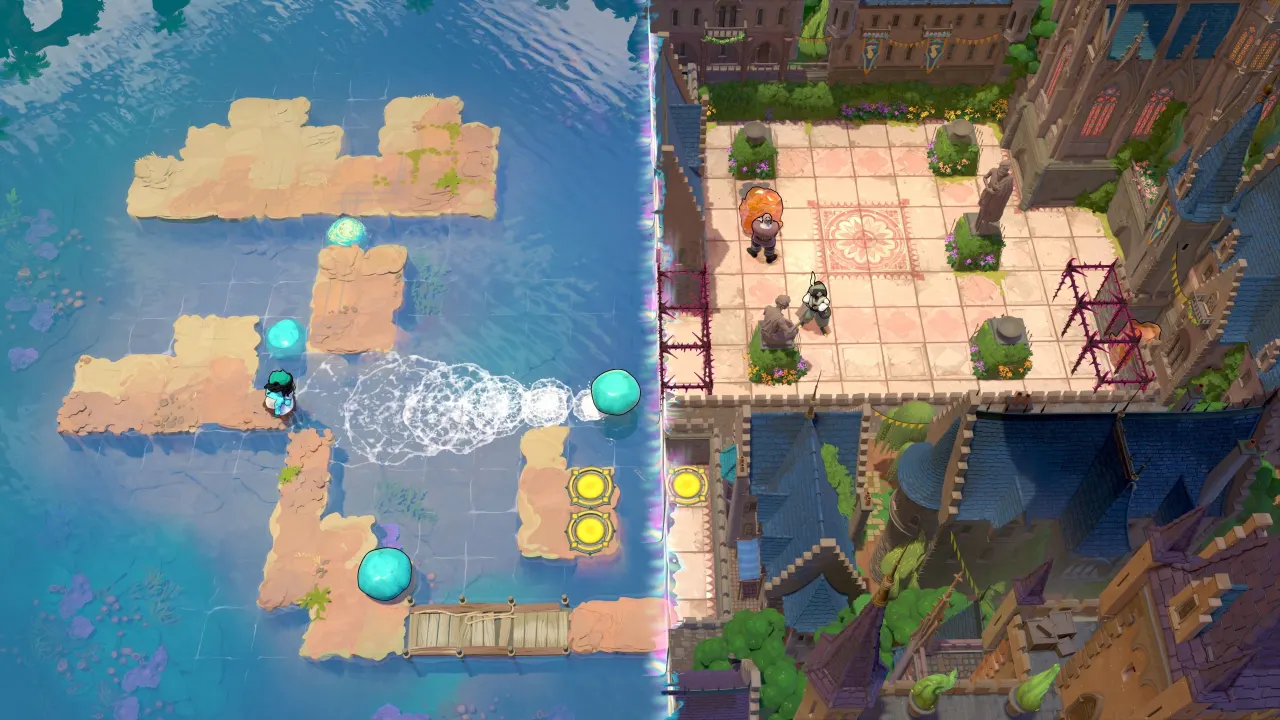
Thekla Inc has confirmed that Order of the Sinking Star, its follow-up to The Witness, will launch on 8 October for Nintendo Switch 2, PlayStation 5 and Windows PC, alongside a resolution to concerns over how the puzzle game credits its influences. Led by Braid creator Jonathan Blow, the project draws on several indie Sokoban-style titles, including Mirror Isles, Promesst and Heroes of Sokoban, but had faced criticism after some of those developers, notably Mirror Isles creator Alan Hazelden, distanced themselves from Blow over his past controversial public statements, and after confusion arose over inconsistent in-game credit displays between builds.
A Thekla PR representative has now confirmed to Polygon that all developers whose licensed games contributed will receive full credit, delivered in an unspecified "special way in-game in the iconic style of Jonathan Blow" and also listed on MobyGames and in press materials. Separately, Blow outlined the game's structure as three layers: an early-game phase teaching mechanics such as pushing rocks and building bridges, a mid-game combining those mechanics across explorable rooms, and an undisclosed late-game layer; players seeking a definitive ending need not clear more than 1,000 of the game's more than 500-hours'-worth of puzzles.
- Order of the Sinking Star releases 8 October on Switch 2, PS5 and PC.
- Thekla confirms full credits for developers of games that inspired it.
- Credits row followed criticism of Jonathan Blow's past controversial remarks.
New here? Start with this
Order of the Sinking Star is a puzzle game from Thekla Inc, the studio behind The Witness, led by Jonathan Blow, who also created Braid. The game draws heavily on ideas from smaller, independently made puzzle games in the Sokoban style, where players push boxes around to solve levels, and it is notable for its unusually large scale and long playtime.
The game has attracted attention beyond its design because of how it credits the independent developers whose work it builds on. Some of those creators, including Alan Hazelden of Mirror Isles, have distanced themselves from the project, partly over past comments Blow made about COVID-19, and partly after confusion arose when an early demo build appeared to be missing a credits section. This raised questions about whether the smaller developers who inspired the game would be properly acknowledged.
The story matters both to puzzle-game fans anticipating a major, ambitious release and to the wider indie development community, where debates about crediting and attribution carry weight given the imbalance in resources and recognition between a well-known studio and smaller independent creators.
Both sides, in good faith
The strongest fair case each way — we don't pick a winner.
The case for
Those sympathetic to the critics argue that when a major studio builds an entire game around mechanics pioneered by small independent developers, transparent and prominent credit is not optional generosity but a basic professional obligation, and that a demo shipping without a credits slab, followed by vague assurances, understandably read as carelessness or reluctance rather than oversight. They see the developers who distanced themselves, including Alan Hazelden, as acting in good faith to protect their own reputations and the norms of a small, trust-dependent indie community, and view scrutiny of Blow's past public statements as a legitimate part of deciding whose projects to be associated with.
The case against
Those more sympathetic to Thekla and Blow would argue that licensing agreements were reportedly in place, that the studio has now confirmed full, stylised, multi-venue crediting for every contributing developer, and that judging a large, unfinished project by an early demo's rough edges risks mistaking incompleteness for bad faith. They would also caution against conflating a creator's unrelated personal opinions, however unpopular, with the separate question of whether collaborators and inspirations were properly acknowledged, arguing that ambitious creative works deserve to be judged on their own merits and stated commitments rather than by association.
More coverage
- Collider — Titus Welliver's 'Bosch' Replacement Series Gets Official Update From New Star
- Push Square — Braid, The Witness Dev's Massive New Puzzle Game Comes to PS5 in October
Celebrity Entertainment Software Technology
Read the full article at the source →
Originally published by Polygon as “Order of the Sinking Star Gets a Fall Release Date and Credits Update”.