Mirrorless vs DSLR: Which camera type is better?
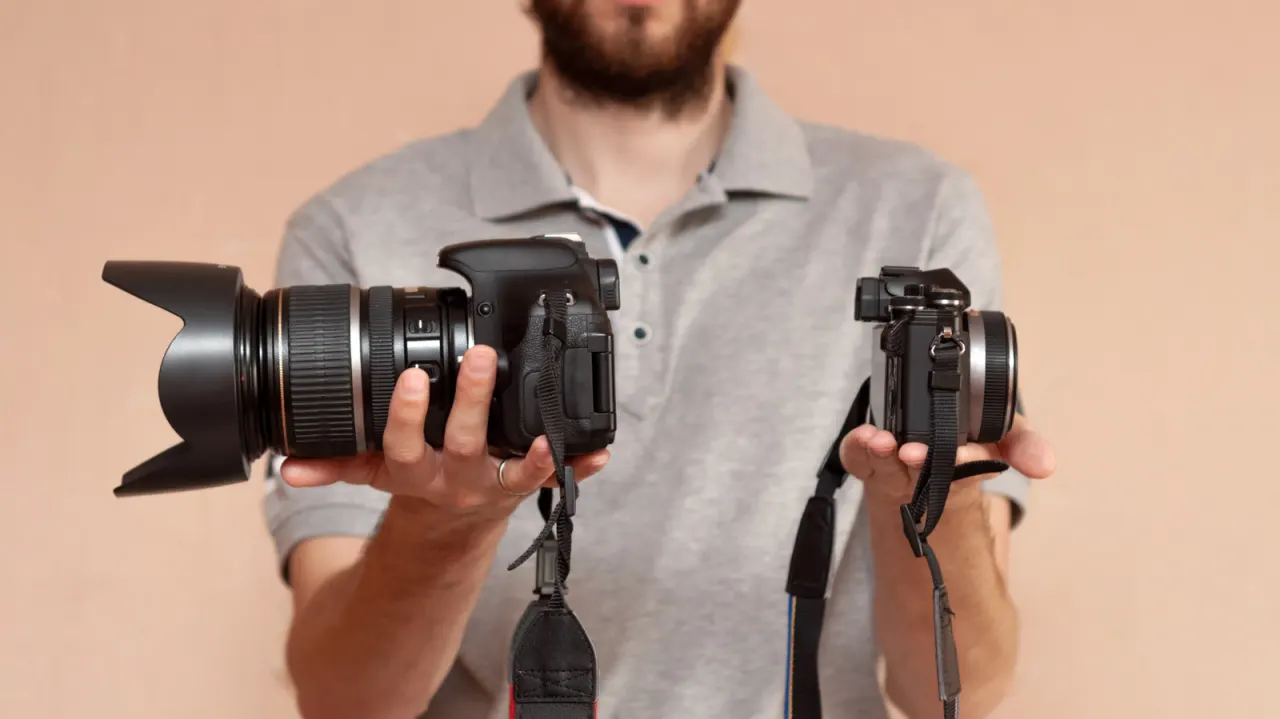
Choosing between a mirrorless camera and a DSLR has become a key decision for anyone buying an interchangeable-lens camera, as manufacturers increasingly focus their newest technology on mirrorless systems. Canon and Nikon, among others, have shifted investment in autofocus, video capability and lens development towards mirrorless lines, meaning mirrorless models now generally offer more advanced features, though DSLRs remain capable cameras rather than obsolete ones.
The core difference lies in how each camera directs light: a DSLR uses an internal mirror to send light to an optical viewfinder before flipping up to expose the sensor, while a mirrorless camera sends light directly to the sensor, displayed via a screen or electronic viewfinder. This gives mirrorless cameras advantages such as wider autofocus coverage, subject detection and faster burst shooting, though DSLRs typically retain better battery life since they don't power a screen constantly. A Shotkit survey of 1,000 photographers found 63% of professional respondents used mirrorless cameras, though the sample was drawn from Shotkit's own audience rather than being fully representative. Existing DSLR owners with established lens collections may still find it more practical to stick with their current system rather than switch.
- Mirrorless cameras now lead in autofocus, speed and video technology
- DSLRs remain solid, especially for those with existing lens collections
- Survey found 63% of professional photographers use mirrorless systems
New here? Start with this
Interchangeable-lens cameras let photographers change lenses for different subjects and conditions. DSLRs use a mirror to show the scene through an optical viewfinder; mirrorless cameras send light straight to the sensor and show the image on a screen or electronic viewfinder.
Canon, Nikon and other camera makers now focus much of their new development on mirrorless models, including autofocus, video and lenses. These cameras often offer broader autofocus and faster shooting, while DSLRs can last longer on a battery and remain capable options.
The choice can depend on what someone already owns and how they use a camera. Photographers with a collection of DSLR lenses may find it more practical to keep using that system, while those buying new may weigh features, battery life and available lenses.
Both sides, in good faith
The strongest fair case each way — we don't pick a winner.
The case for
Mirrorless cameras represent the genuine trajectory of the industry, with major manufacturers now concentrating their most advanced autofocus technology, video capabilities and lens innovation exclusively on mirrorless platforms. The real-time electronic viewfinder feedback offers measurable advantages in autofocus accuracy, subject detection and burst shooting that translate directly into more successful image capture, particularly for demanding work such as wildlife or fast-action photography. For anyone making a fresh investment in a camera system, choosing mirrorless means gaining access to the tools that will define the medium for years to come rather than adopting ageing technology.
The case against
For photographers with existing DSLR lens collections, the practical and financial case for switching remains weak; the cost of new camera bodies and rebuilding a lens system often far exceeds any genuine improvement to the photographs they produce. DSLRs remain fully capable cameras that reliably deliver excellent results, and their substantially superior battery life offers a genuine advantage during field work when access to charging is limited. The sensible approach is to use the mature, dependable system one already owns rather than chase incremental technical refinements that most photographers will never fully exploit.