World news and discussion on TalkFuse.
The United States is about to wake up to the threat from China’s space program
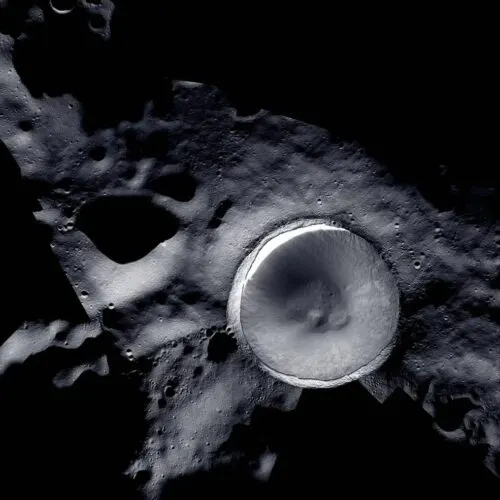
The article argues the United States is about to be jolted into recognising China's growing lunar ambitions, as China prepares to launch its Chang'e 7 mission targeting the Moon's south pole. The piece frames this as a pivotal moment in the broader US-China space rivalry, warning that if China lands humans on the Moon before NASA returns there, it would be seen as a major geopolitical and propaganda victory signalling China's rise as a rival superpower.
As soon as this Sunday, a Long March 5 rocket will launch Chang'e 7, China's most advanced lunar mission yet, carrying an orbiter, lander, rover and a hopper probe. It aims to land near Shackleton Crater, close to the lunar south pole, a region no spacecraft has ever reached despite over 100 Moon missions since the Soviet Union's Luna 1 in 1959. The area is prized for permanently shadowed "cold traps" believed to hold water ice, making it central to both NASA's and China's plans for long-term lunar settlement; the article notes that the US Congress has already begun responding by granting NASA Administrator Jared Isaacman scope to overhaul lunar programme plans, including scrapping the Lunar Gateway station.
In short
- China's Chang'e 7 mission launches as soon as Sunday, targeting the Moon's south pole.
- It would be the first-ever landing near Shackleton Crater's water-ice "cold traps".
- Success would intensify the US-China race to return humans to the Moon.
Steelman: both sides, in good faith
The strongest fair case each way — we don't pick a winner.
The case for
China's rapid progress toward the Moon's south pole with Chang'e 7 demonstrates advanced technological capability and will likely establish significant presence before equivalent American efforts, securing access to strategically valuable water ice and positioning for long-term space development. The geopolitical implications are genuine: technological leadership and first-mover advantages in space infrastructure carry real consequences for international influence and the trajectory of space exploration. The United States therefore has compelling national interests in responding urgently to maintain competitive advantage and protect its technological standing.
The case against
International cooperation frameworks, particularly the Outer Space Treaty, offer more efficient paths to advancing lunar exploration and scientific knowledge than competitive duplication of efforts; all nations benefit from human progress in space regardless of which achieves particular milestones first. China's development of sophisticated space capabilities represents genuine advancement in human knowledge that could serve scientific goals more effectively through collaboration than through competitive technological escalation. Framing space exploration primarily as great power competition risks wasteful duplication and resource allocation toward prestige rather than towards the shared human benefits that international partnerships might better achieve.
Explained simply
China and the United States are developing plans to explore and eventually send people to the Moon. China’s Chang’e missions are a series of robotic spacecraft, while NASA leads the US lunar programme. Both countries are interested in the Moon’s south pole, where permanently shadowed craters may contain water ice.
Water could support future stays on the Moon, so the region has scientific and strategic importance. A human landing by either country would draw attention to its space capabilities and influence; the two programmes also shape decisions about how their governments invest in lunar exploration.
Americas Asia Space Technology World