World news and discussion on TalkFuse.
Ihsane review – Sidi Larbi Cherkaoui leads us from brutal tragedy to euphoric harmony
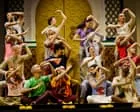
Sidi Larbi Cherkaoui's dance production Ihsane, staged at the Edinburgh international festival, commemorates Ihsane Jarfi, a gay man tortured and killed in Belgium in 2012, while also paying tribute to the choreographer's own father, who died 30 years ago. Rather than dwelling solely on the horror of the crime, as Milo Rau's 2019 Edinburgh production La Reprise did, Cherkaoui uses the piece to explore the interconnectedness of lives, grief and healing, moving between brutal violence and moments of euphoric harmony and kindness.
The show opens with a communal Arabic class scene, featuring intricate choreography, live music from viola d'amore, piano, oud and percussion, and an ornate golden-doored set, before shifting to a harrowing depiction of Jarfi's death. Later sections reflect on the aftermath, featuring swaying ensembles under golden lighting, spoken texts on grief, and a mix of ritual and everyday imagery, including a tea ceremony and a football, punctuated by unsettling flashes of violence including a throat-cutting scene rendered through video design.
In short
- Cherkaoui's Ihsane honours murdered gay man Ihsane Jarfi and his own father.
- Show blends brutal violence with joyful, harmonious dance sequences.
- Praised as an engrossing, expansive meditation on grief and healing.
Steelman: both sides, in good faith
The strongest fair case each way — we don't pick a winner.
The case for
The artistic approach demonstrates that memorialising tragedy need not be exploitative; by moving from horror to healing, Cherkaoui respects Jarfi's humanity rather than reducing him to his death. The integration of the choreographer's personal grief alongside Jarfi's story suggests their suffering connects to larger human experiences of loss, creating space for audiences to find meaning and catharsis. The sophisticated aesthetic elements—live music, complex choreography, intentional visual design—reflect the gravity of the subject and enable genuine emotional engagement.
The case against
Creating art from real violence raises serious questions about whether the victim's dignity is truly honoured or whether their suffering becomes material for aesthetic experience. A focus on 'euphoric harmony' and healing following such brutality risks minimising ongoing injustice; merging Jarfi's specific memorial with the choreographer's personal loss may obscure his individual story. Graphic depictions, however artfully rendered, might constitute exploitation—using real suffering for compelling artistic effect rather than centring the victim's actual humanity and the need for accountability.
Explained simply
Ihsane Jarfi was a gay man who was tortured and killed in Belgium in 2012. His death became the subject of public attention and has been explored in art, including Milo Rau’s 2019 theatre production La Reprise.
Sidi Larbi Cherkaoui is a Belgian choreographer known for making dance for the stage. In Ihsane, he connects Jarfi’s story with his own grief for his father, who died 30 years earlier, using movement, music and spoken words to explore how people live with loss.
The story matters because it links violence against a gay man with wider questions about grief, care and how people share a community. The production moves between scenes of brutality and moments of everyday life and collective warmth.