World news and discussion on TalkFuse.
US claims 15 of the world’s top 20 hyperscale datacenter locations
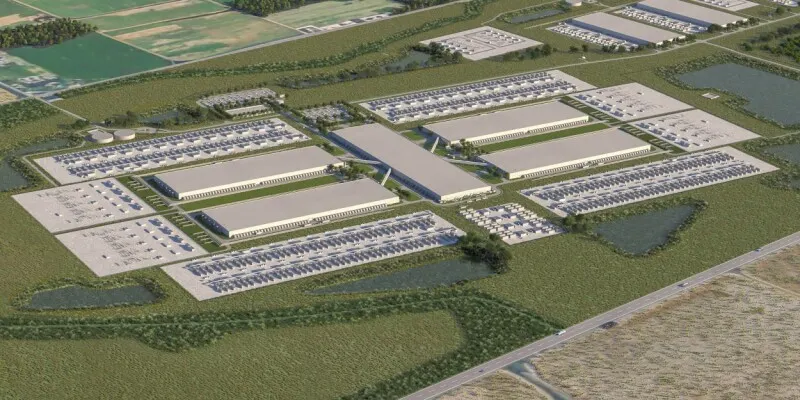
The United States now hosts 15 of the world's 20 largest hyperscale datacentre markets, with Northern Virginia alone accounting for nearly 12 percent of global capacity, according to Synergy Research. American dominance has grown over the past year as cloud providers continue to expand infrastructure, driven by the concentration of major operators' headquarters in the country and the enormous scale of new campus developments, though the rise also intensifies concerns over power demand and local community pushback near major sites.
Since last year, Tokyo, Sydney and South Carolina have dropped out of the top 20, replaced by Indiana, Tennessee and China's Guangdong province, leaving only five non-US markets, four of them in Asia-Pacific and just one, Dublin, in Europe. Synergy attributes US dominance to 62 percent of hyperscale operators being headquartered there and the country generating almost half of global cloud revenue in key segments; Amazon, Microsoft and Google alone hold 57 percent of worldwide hyperscale capacity. While Northern Virginia's Loudoun County hosts around 250 datacentres and expects $1.3 billion in equipment taxes next year, growth is shifting inland, with Texas capacity up 71 percent over the past year against 36 percent worldwide, and Synergy tracking a further 915 facilities in planning or development.
In short
- US holds 15 of top 20 global hyperscale datacentre markets
- Northern Virginia alone has nearly 12% of world capacity
- Growth is shifting inland, with Texas up 71% in a year
Steelman: both sides, in good faith
The strongest fair case each way — we don't pick a winner.
The case for
The concentration reflects the legitimate economic and technological dominance of American cloud providers and the substantial revenue they generate globally. This infrastructure investment creates significant local and national benefits through tax revenue, skilled employment and supporting the digital economy that drives international commerce and innovation.
The case against
The extreme concentration of global datacentre capacity in a single country raises serious concerns about geopolitical resilience and supply chain vulnerability if disruptions occur. Rapid local expansion also creates substantial environmental and community costs—including massive power demand that strains grids, water usage, waste heat and emissions—that often burden residents whose input into development decisions remains limited.
Explained simply
Hyperscale datacentres are very large facilities that store and process data for cloud services, such as online storage, streaming and business software. They are run by major technology companies, including Amazon, Microsoft and Google, and are grouped into regional markets where many facilities and computing capacity are concentrated.
The United States has many of these markets because several leading operators are headquartered there and cloud services are a large part of its technology industry. Northern Virginia is a major hub, while other regions have also attracted new construction; outside the US, prominent markets include parts of Asia-Pacific and Dublin.
These facilities support services used by businesses and the public, but they require substantial electricity and space. Their growth can affect local power systems and communities, so the location and scale of new datacentres have become matters of public discussion.