DR Congo and M23 rebels agree roadmap for peace talks
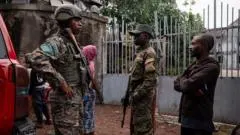
The Democratic Republic of Congo's government and the Rwanda-backed M23 rebel group have agreed a roadmap for peace talks following five days of negotiations in Switzerland. The agreement sets a timeline for discussions under the US-brokered peace framework the two sides signed in 2025, an accord that failed to halt fighting in eastern DR Congo, a region that has endured decades of conflict. The move matters because it establishes a formal mechanism to monitor ceasefire violations, though significant disagreements persist over sanctions against M23, the release of detainees and the timing of political reforms.
The talks were attended by M23, the DR Congo government, Qatar, the US, Togo, the African Union Commission and host Switzerland, all referencing the 2025 Doha Framework Agreement. A ceasefire-monitoring secretariat has now been set up, with the first verification mission due in Minembwe, South Kivu, on Monday. The wider conflict is intertwined with tensions between DR Congo and Rwanda, which denies backing M23 despite what the article describes as overwhelming evidence; fighting escalated in January 2025 when M23 seized Goma and other territory, killing thousands and displacing hundreds of thousands, in a mineral-rich region vital to global electronics supply chains.
- DR Congo and M23 agree a roadmap for further peace negotiations
- Ceasefire monitoring mechanism launched; first mission set for Monday
- Key disputes remain over sanctions, detainees and reform timing
New here? Start with this
The eastern part of the Democratic Republic of Congo has been gripped by conflict for decades, largely over land, ethnic tensions and control of valuable minerals used in electronics. M23 is an armed rebel group that has seized large amounts of territory there, including the city of Goma in January 2025, killing thousands of people and forcing hundreds of thousands from their homes. DR Congo's government accuses neighbouring Rwanda of arming and directing M23, which Rwanda denies.
In 2025 the two sides signed a US-brokered peace agreement, but it failed to stop the violence on the ground. Efforts to end the fighting have since drawn in a wider group of international players, including the United States, Qatar, the African Union and Switzerland, reflecting how difficult the conflict has been to resolve through bilateral talks alone.
The underlying disputes are not just military. They also involve unresolved questions such as whether sanctions should be imposed on M23, what should happen to people detained during the fighting, and how quickly political reforms should take place, all of which continue to complicate any path towards a lasting settlement.
Both sides, in good faith
The strongest fair case each way — we don't pick a winner.
The case for
Supporters of the roadmap argue that, after decades of conflict and hundreds of thousands displaced, a negotiated process is the only realistic route to reducing bloodshed, even if it is imperfect. They point to the establishment of a ceasefire-monitoring secretariat and an imminent verification mission as tangible, verifiable steps rather than empty promises, and note that broad international backing from the US, Qatar, the African Union and Switzerland lends the process credibility and pressure that previous bilateral efforts lacked. For this camp, engaging M23 and addressing sanctions, detainees and political reforms through dialogue, however slow, is preferable to prolonging a war that has already cost thousands of lives.
The case against
Sceptics of the process argue that formal talks risk rewarding armed conquest, given M23 seized Goma and other territory by force with what the article describes as substantial evidence of Rwandan backing that Kigali continues to deny. They point out that the 2025 framework this roadmap builds on already failed to stop the fighting, and worry that further procedural agreements may again produce diplomatic language without changing conditions on the ground. For this camp, unresolved questions over sanctions, the release of detainees and the pace of political reforms suggest accountability could be traded away for the appearance of progress, leaving the underlying causes of the conflict, including external support for the rebels, unaddressed.