Devastating wildfire burning through Nevada threatens Reno…injury count rises after several homes and a hospital forced to EVACUATE
Developed over time first seen 2 months ago
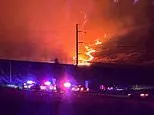
The Hawk Fire tore through the Peavine Peak area near Reno, Nevada, after breaking out on a Saturday in late August, forcing roughly 90,000 people to evacuate and injuring six people, including three civilians and three first responders. The human-caused blaze grew to 20 square miles with no containment reported, jumping fire trucks and shifting direction unpredictably as winds changed, which Washoe County Sheriff Darin Balaam described as "extremely confusing" for both residents and emergency crews. Several homes and businesses were destroyed, including that of Cari Kieffer, whose family of six escaped with only their pets after watching flames advance on their neighbourhood from her son's football game.
At the fire's peak, 42,000 residents were under mandatory "GO NOW" evacuation orders and a further 45,000 were in a warning zone, with the sheriff urging even those not yet ordered out to leave early to avoid gridlock on the more than dozen closed roads. Northwest Specialty Hospital evacuated its rehabilitation and behavioural health patients as a precaution, while the nearby University of Nevada, due to start classes for almost 24,000 students, prepared its own evacuation plan. Nearly 10,000 homes and businesses remained without power, down from a peak of 60,000, and the Reno-Sparks Convention Center was opened to displaced residents, with casinos offering discounted rooms and separate sites arranged for evacuated pets.
- Hawk Fire near Reno forced about 90,000 evacuations, injured six people
- Human-caused blaze grew to 20 square miles, unconctained, destroying homes
- Hospital and university made evacuation preparations amid power outages
New here? Start with this
Wildfires are common in the western United States, especially in late summer when vegetation is dry and winds are strong, and they can spread within hours across areas close to towns and cities. Nevada, a largely dry, mountainous state, borders California and sits at the edge of the Sierra Nevada range; Reno, its second-largest city, lies close to wildland areas that have long been considered at risk during fire season.
The Hawk Fire is one such blaze, and its proximity to a major population centre, rather than a remote wilderness, is what has made it especially disruptive. Fires of this kind are typically fought by state and federal agencies, including the US Forest Service, which manages the national forest land involved here, working alongside local police, fire services and utility companies who coordinate evacuations and power shutoffs to reduce danger.
Events like this typically raise questions about what caused the fire, how quickly emergency services can warn and move residents, and the toll on housing, infrastructure and daily life in the affected area. The scale of evacuation orders and the strain on services such as hospitals and power networks are often used as early indicators of how serious a wildfire has become.
More coverage
- NPR — Thousands forced to evacuate parts of Reno, Nevada, as new wildfire rages
- BBC World — Nearly 90,000 told to evacuate as wildfire approaches Reno, Nevada
- BBC World — Watch: Wildfire seen near Reno as tens of thousands told to evacuate
- The Hill — Fast-moving wildfire threatens Reno, Nevada, forcing thousands to evacuate