Nearly 3 million Teslas recalled in China over hidden door handles
Developed over time first seen 2 months ago
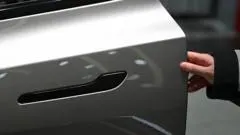
China has confirmed its largest-ever car recall, covering more than 4 million vehicles from Tesla, XPeng, Xiaomi and Geely, after concluding that hidden, flush-fitting door handles are too hard to find and operate in an emergency. Nearly 2.98 million Chinese-made Teslas are included, with the firm saying handles on its Model 3, Y, S and X are "difficult to identify and operate because their colour is similar to the interior trim," which could trap occupants and hinder rescuers if a crash disables the low-voltage electrical system. Rather than a physical redesign, the affected cars will simply receive warning labels and a software update that automatically lowers the windows after a collision.
Scrutiny of the once-fashionable retractable handle design, which spread across the industry after Tesla popularised it on the Model S from 2014, intensified following two fatal crashes in China involving Xiaomi EVs in which power failures were suspected of preventing doors from opening. In February Chinese authorities went further, announcing that from 1 January 2027 cars sold in the country must have a mechanical release on both the inside and outside of every door, making the current labels and software fix a temporary measure rather than a permanent solution. Tesla's door handles have also drawn scrutiny from US regulators over reports of children being trapped in cars, though it remains unclear whether any of the manufacturers will extend the recall beyond China.
- China recalls over 4 million cars, including 2.98 million Teslas
- Hidden door handles blamed for hindering escape in crashes
- Fix is a warning label plus software update, not a redesign
New here? Start with this
China's market regulator has ordered a recall of more than four million cars over concerns about flush, retractable door handles that sit hidden in the bodywork rather than sticking out. These handles have become popular for their sleek look and better aerodynamics, but critics worry they can be hard to find or operate in an emergency, especially if a crash knocks out the car's power, since many rely on electronics to pop open.
Tesla accounts for the largest single share, with nearly 3 million of its Chinese-built Model 3, Y, S and X cars affected, alongside vehicles from domestic manufacturers XPeng, Xiaomi and Geely. Xiaomi, better known for phones and gadgets, is a relatively new entrant to carmaking, and its involvement highlights how competitive and fast-growing China's electric vehicle market has become.
The issue has drawn attention partly because of fatal crashes in China in which people reportedly could not escape vehicles after doors failed to open, prompting Chinese regulators to move towards banning hidden handles altogether from 2027 in favour of designs with a mechanical backup. Because China is Tesla's largest manufacturing base outside the United States, the recall is a significant test of how the company responds to safety concerns in one of its most important markets.
Both sides, in good faith
The strongest fair case each way — we don't pick a winner.
The case for
Advocates of Tesla's approach argue that a targeted software fix, paired with clear warning labels, directly addresses the actual failure mode identified: drivers and rescuers not knowing how to operate the handles, particularly after a collision. They point out that automatically lowering windows post-crash creates an alternative escape and rescue route without the cost, delay and potential compromise to aerodynamics, weather sealing or aesthetics that a full mechanical redesign of millions of vehicles would entail. From this perspective, proportionate, software-driven remedies reflect sensible engineering judgement, allowing manufacturers to correct a real problem quickly while preserving the design choices that make these vehicles distinctive and, they would argue, no less safe once drivers are properly informed.
The case against
Critics, including Chinese regulators who have now mandated mechanical releases on both sides of every door from 2027, argue that a physical, manually operable handle is a basic safety redundancy that should never depend on electronics, software or driver memory, especially in a crash where power may fail entirely. They point to the fatal incidents involving power-loss scenarios as evidence that warning labels and software patches are reactive half-measures rather than fixes to the underlying design flaw. For this side, the value at stake is that emergency egress must work reliably under the worst conditions, for occupants and rescuers alike, and that convenience or styling considerations should never be allowed to compromise so fundamental a safety guarantee.