Burnham visits Kyiv to reaffirm UK support for Ukraine
Developed over time first seen 2 months ago
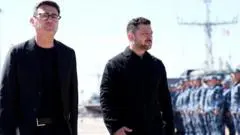
Andy Burnham used his first foreign visit as UK prime minister to travel to Kyiv, chairing a "coalition of the willing" meeting and vowing that British support for Ukraine would not waver despite "outrageous threats" from Moscow. The visit centred on a UK decision to hand over blueprints for British-made components of the Scalp missile, a French variant of the Storm Shadow cruise missile, enabling Ukraine to build the long-range weapon domestically. The trip came as Russian strikes on Ukraine escalated, including an attack on a shopping centre on Friday that killed at least 16 people, and drew sharp criticism from the Kremlin.
Kremlin spokesman Dmitry Peskov said sharing the missile blueprints blocked "even the slightest progress" towards peace and claimed Russia's military was already working to locate and destroy any production sites; Burnham countered by asking "who started the fire?" Alongside French President Emmanuel Macron and German Chancellor Friedrich Merz, Burnham co-chaired the 34-nation coalition, which pledged to prioritise strengthening Ukraine's air defences and to tighten sanctions on Russia's "shadow fleet". The visit also saw the EU release €6.1bn (£5.2bn) in military aid as part of a wider €90bn loan, a new UK-Ukraine military AI data-sharing partnership, and Burnham laying flowers at a military cemetery and receiving an award from President Zelensky marking Ukraine's independence day.
- Sources
- 2
- Outlets
- 2
- Left · Centre · Right
- 0 · 1 · 1
In short
- Burnham pledges UK will share Scalp missile blueprints with Ukraine.
- Kremlin condemns move, warns it will target production sites.
- EU releases €6.1bn in military aid amid escalating Russian strikes.
How this story developed
- 2 months ago Andy Burnham has announced that the UK will let defence firm MBDA declassify information on British components in the Scalp long-range missile, allowing Ukraine to build its own version of the weapon.
- 2 months ago Andy Burnham used his first foreign visit as UK prime minister to travel to Kyiv, chairing a "coalition of the willing" meeting and vowing that British support for Ukraine would not waver despite "outrageous threats" from Moscow.
- 2 months ago Andy Burnham has travelled to Kyiv for his first foreign visit as prime minister, aiming to reaffirm UK support for Ukraine and mark the country's independence day.
Where outlets differ
Centre outlets 1
Only here: visits, reaffirm, support
Right-leaning outlets 1
Only here: hits, major, russian, shopping, hubs
Every side used: burnham, kyiv, ukraine
Headline columns compared word for word; nothing in them is AI-written.
Steelman: both sides, in good faith
The strongest fair case each way — we don't pick a winner.
The case for
Supporters argue that Ukraine's sovereignty and the deterrence of aggression depend on sustained, visible allied backing, and that Burnham's visit, chairing of the coalition of the willing, and moves to boost missile transparency and local assembly signal reliability to both Kyiv and Moscow. They contend that wavering or hedging support, especially after previous governments committed to it, would reward escalation such as the deadly strike on the shopping centre and embolden further Russian aggression, while continuity in policy reassures allies that Britain's commitments outlast changes of leadership.
The case against
Sceptics argue that deepening involvement, including declassifying missile component details and enabling local assembly lines, risks further entangling Britain in the conflict and provoking exactly the retaliatory escalation Moscow has warned of, potentially raising risks to UK security without a clear exit strategy. They contend that resources and diplomatic capital might be better directed towards pursuing a negotiated settlement or focusing on domestic priorities, and that symbolic gestures like awards and high-profile visits should not substitute for a candid public debate about the long-term costs and endpoint of continued military support.
Explained simply
Andy Burnham is the UK prime minister, and Kyiv is the Ukrainian capital he has now visited for the first time since taking office. Ukraine has been fighting to repel a full-scale Russian invasion that began in February 2022, and Western allies including Britain have supported it with weapons, funding and diplomatic backing. The "coalition of the willing" is a grouping led by the UK and France that coordinates support for Ukraine among sympathetic nations.
The visit falls around Ukraine's independence day, a national holiday marking its 1991 break from the Soviet Union, which has taken on added significance during the war with Russia. British support for Ukraine has included supplying military equipment such as Scalp missiles, made by the European defence firm MBDA, and more recently drones that Ukraine has used to strike targets inside Russia.
This matters because the war remains ongoing and deadly, with civilian casualties continuing on both sides, and because the level of Western military support directly affects Ukraine's ability to defend itself and Russia's response. Diplomatic relations between the UK and Russia have also been strained throughout the conflict, forming the backdrop against which any current developments should be understood.
Coverage · 2 sources
Bias meters
From 2 rated sources.