Canada set to retaliate after US tariffs take effect and trade negotiations collapse
Developed over time first seen 2 months ago
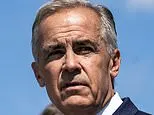
Canada's trade dispute with the United States has settled into an entrenched standoff, with Ottawa deploying a mix of formal retaliatory tariffs and grassroots economic pressure after negotiations collapsed. Prime Minister Mark Carney's government finalised "dollar-for-dollar" countermeasures targeting steel, dairy, appliances, agricultural equipment, electronics and pulp and paper, while Ontario Premier Doug Ford emerged as the most combative voice, insisting the US "won't get a grain of sand out of Ontario" and accusing President Trump of underestimating Canada's leverage.
That leverage rests on Canada's dominance as a supplier: it provides most of America's imported natural gas and electricity and roughly 60% of its crude oil, alongside major reserves of potash, lithium, nickel and graphite, though ministers have so far held back from weaponising energy exports directly. The dispute's clearest economic damage came from a provincial alcohol boycott introduced after the first round of US tariffs, still in force in 11 of 13 provinces and territories, which the Wine Institute called the most significant market disruption in decades — cutting US wine exports to Canada by 78% (a $357m/£261m loss) and American spirits exports by more than 70%. Canada's Finance Department confirmed further protective measures for workers and businesses, alongside a broader grassroots decline in Canadian travel to the US, though the government did not detail whether energy or critical minerals would ultimately be added to its formal tariff list.
- Canada finalised retaliatory tariffs on US steel, dairy and other goods.
- Provincial alcohol boycott slashed US wine and spirits exports sharply.
- Ottawa holds back energy and minerals leverage but hasn't ruled it out.
New here? Start with this
Canada and the United States have long been each other's biggest trading partners, but relations have soured after President Trump imposed tariffs on Canadian goods, prompting talks aimed at resolving the dispute. Those negotiations have now broken down, with the tariffs taking effect and Canada preparing to respond in kind. Prime Minister Mark Carney leads the federal response, while provincial leaders such as Ontario's Doug Ford have taken a prominent public role in pushing back.
Canada holds significant leverage in the dispute because of what it sells to the US, including most of America's imported natural gas and electricity, a majority of its crude oil, and key minerals such as potash, lithium and nickel that American industries rely on. This is not the first round of confrontation: an earlier bout of tariffs led several provinces to boycott American alcohol, which caused a sharp fall in US wine and spirits sales to Canada.
The dispute matters because it affects prices, jobs and supply chains on both sides of the border, given how closely the two economies are linked. It also raises broader questions about how far each government is willing to go, since further retaliatory measures from Canada are still being finalised and energy has been mentioned as a possible additional tool, though not yet used.
Both sides, in good faith
The strongest fair case each way — we don't pick a winner.
The case for
Advocates of Ottawa's robust response argue that Canada cannot allow itself to be treated as a pushover simply because it is the smaller economy; matching tariffs dollar-for-dollar, and even floating energy measures, demonstrates genuine leverage given Canada's dominance in oil, gas, electricity, potash and critical minerals. They contend that the alcohol boycott already proved retaliation works, inflicting real costs on US exporters and voters in ways ordinary diplomacy could not, and that firmness now is the surest way to bring Washington back to the negotiating table on fair terms and protect Canadian jobs and sovereignty over the long run.
The case against
Those wary of escalation argue that a trade war has no guaranteed winners, and that Canada, with an economy roughly a tenth the size of America's and deeply integrated supply chains, risks disproportionate self-harm from tit-for-tat tariffs, higher consumer prices and lost investment. They caution that weaponising energy exports in particular could damage Canada's reputation as a reliable supplier and invite even harsher countermeasures, and that a calmer, negotiation-first approach better protects ordinary Canadians and businesses while preserving the broader relationship both countries depend on.
Full account
Canada is poised to unveil a package of retaliatory tariffs against the United States on Tuesday, marking a sharp escalation in the trade dispute between the two long-time allies after negotiations aimed at averting the measures broke down at the end of last week. Prime Minister Mark Carney withdrew Canada from talks on Friday, only hours before Washington's 50% tariffs on roughly $20 billion of Canadian goods were due to come into force. Finance Minister François-Philippe Champagne and several other cabinet ministers are expected to appear alongside Carney to set out support measures for workers and businesses affected by the fallout, while Donald Trump has warned Canadian leaders to 'fall in line' or face consequences he says would be far harsher than the tariffs already imposed.
Accounts of why the talks collapsed differ. Carney has said Washington's late demands were 'uneconomic' and undermined confidence that any agreement reached would hold, adding that Canada had learned the US side wanted to hollow out key Canadian industries such as autos, steel and aluminium. Washington disputes this version of events, saying it was Canada that introduced last-minute sticking points. Canada's ambassador to the US, Mark Wiseman, has offered a more measured account, suggesting there was no single deal-breaking issue but rather a series of disagreements — over auto tariffs, digital and cultural policy, and a US demand for an effective veto over Canada's trade arrangements with other countries — where the final text did not match what Canadian negotiators believed had been agreed. Carney has also signalled that Ottawa may move away from strict dollar-for-dollar retaliation in favour of more targeted measures designed to shield Canadian workers and firms, with steel, dairy, appliances, agricultural equipment, electronics and pulp and paper reportedly under consideration, though the final list has not been settled.
Beyond the mechanics of the dispute, several accounts point to a deeper shift in mood. Carney has framed the confrontation in unusually blunt terms, telling Canadians 'you're at war when you're attacked, and we got attacked' and vowing to 'hit back', while commentary suggests his generally reserved public manner had previously led Washington to underestimate his resolve. Analysts quoted in coverage of the row describe this as evidence that Canada is no longer willing to defer automatically to its larger neighbour, with one academic characterising it as a signal that the old assumption of Canadian accommodation no longer holds. Ontario Premier Doug Ford has been especially outspoken, telling Trump to 'kiss my ass' and warning that the US 'won't get a grain of sand out of Ontario', while also floating the possibility of a surcharge on electricity exports that could affect over a million households and businesses in neighbouring US states. Coverage highlights that Canada is not without leverage: it is the top export market for 26 US states and among the top three for 45 of them, supplies the bulk of America's natural gas and electricity imports and around 60% of its crude oil imports, and is the world's leading supplier of potash as well as a major source of critical minerals such as lithium, nickel and graphite — though officials have so far stopped short of formally including energy in the retaliatory package.
With Tuesday's announcement expected to formalise Canada's response and confirm accompanying support for affected sectors, the dispute appears set to deepen rather than ease in the near term. Trump has continued to insist publicly that Canada relies on the US far more than the reverse, describing Canada as having 'ripped off' America for years, while Canadian public opinion — described in some reports as firmly behind Carney despite the likely economic cost — leaves the government under domestic pressure to hold a firm line. Coverage varies in emphasis: some reports concentrate on the personal war of words between the two leaders and the immediate political theatre, others frame the episode as a broader rupture in the historic US-Canada relationship and wider western alliance, and others focus chiefly on the practical economic leverage Canada could deploy, from energy exports to critical minerals, should the confrontation continue to escalate.
Where outlets differ
One account centres on the personal clash between Trump and Carney, emphasising their public statements, Trump's warning to 'fall in line', and the announcement of domestic worker/business support measures.
An opinion-style account frames the episode as an emotional and political rupture in the US-Canada relationship, stressing Canadian public anger, a sense of betrayal over the alliance, and gives a specific date (8 September) for dollar-for-dollar retaliatory tariffs; it also cites the Canadian ambassador's more nuanced account of why talks failed, differing from the direct 'US denies this' framing elsewhere.
A third account focuses on economic leverage and analysis, detailing trade statistics, Canada's energy and minerals exports, the specific list of goods facing retaliatory tariffs, and quotes extensively from Ontario Premier Doug Ford rather than from Trump or Carney directly.
Sources differ on whether retaliation will be strict dollar-for-dollar matching or more targeted measures, and give conflicting explanations (Canadian vs US perspectives) for which side introduced the last-minute demands that caused talks to collapse.
Coverage
- Daily Mail — Canada prepares to hit US with new tariffs after Trump launches brutal trade war as Mark Carney faces biggest challenge yet as prime minister
- The Guardian — Canadians do not seek a trade war – but neither will we be bullied by Donald Trump | Jen Gerson
- BBC World — How Canada could hit back to hurt the US economy – and Trump