World news and discussion on TalkFuse.
The Great Dictator by Matthew Sweet review – the life of Barbara Cartland
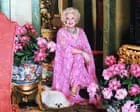
Matthew Sweet's new biography, The Great Dictator, offers a serious and compassionate portrait of Barbara Cartland, the phenomenally prolific romantic novelist who dictated her books aloud to secretaries while reclining with a pekingese on her lap. Rather than mocking Cartland as a lazy joke or camp figure, as some previous accounts have done, Sweet treats her as a genuine cultural phenomenon whose life spanned almost the entire 20th century, drawing on unfettered access to her letters, scrapbooks and typescripts at her Hertfordshire home, Camfield Place.
Cartland wrote 723 novels, producing up to 8,000 words a day and 23 books a year at her peak, with lifetime sales of 750 million topped only by Agatha Christie and Shakespeare. Born in 1901 to a Birmingham trade family and Gloucestershire gentry mother, she was shaped early by loss, including her father's death in the first world war, and went on to become fiercely self-sufficient, first as a Fleet Street gossip columnist chronicling a Bright Young Things generation still traumatised by war, before building her extraordinary literary empire and exerting an iron will over everyone and everything around her, from husbands to the local council.
In short
- Matthew Sweet's biography reassesses Barbara Cartland as a serious cultural figure.
- She wrote 723 novels, dictating up to 8,000 words daily.
- Her life, from 1901 to 2000, was shaped by wartime loss and iron will.
Explained simply
Barbara Cartland was a British writer whose career stretched across much of the 20th century. She became best known for romantic novels, often set in an idealised past, and built a large public profile through journalism and television as well as her books.
Her life began in 1901, in a family shaped by both trade and landed society. After her father died in the first world war, Cartland supported herself as a newspaper gossip columnist, writing about the young social set known as the Bright Young Things. She later turned that experience and her public persona into a long-running writing career.
Cartland’s output and sales made her one of the most widely read authors of her time. Her biography also offers a way to look at how popular fiction was made and received, and how a woman built and controlled a major career in a male-dominated cultural world.