World news and discussion on TalkFuse.
Peter Mandelson ‘was targeted by hoaxer claiming to be key Donald Trump aide’ before Andy Burnham fell for trick
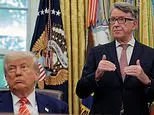
It has emerged that Peter Mandelson, while serving as Britain's ambassador to the US, was targeted in 2025 by a hoaxer posing as Susie Wiles, Donald Trump's chief of staff, a year before a similar impersonator tricked Prime Minister Andy Burnham. The revelation raises fresh concerns about the vulnerability of senior UK and US officials to impersonation scams, particularly given that the same or a similar hoax appears to have circulated among top British diplomatic figures for over a year without being fully traced.
According to a source cited by The Telegraph, the hoaxer texted Lord Mandelson asking to arrange a meeting, but when the British embassy in Washington sought to confirm a date with Wiles' office, it was told her phone had been hacked. Burnham's more recent exchange with an impersonator began before he became Prime Minister and continued after he took office on 20 July 2026; he has downplayed the incident as "minimal" and "of zero consequence" but confirmed it was reported to authorities. It has been claimed the fake number was passed to Burnham by former foreign secretary David Lammy, who held that post at the same time as Mandelson. Wiles has separately had her phone hacked by an AI-voice impersonator in May last year and had her emails infiltrated by a group linked to Iran's Revolutionary Guards in 2024, though the White House says the Burnham incident is unrelated, with Trump dismissing it as a "miscommunication".
In short
- Mandelson was hoaxed by a fake "Susie Wiles" in 2025, before Burnham
- Burnham exchanged messages with the same type of impersonator into his premiership
- David Lammy reportedly passed the hoax number to Burnham; White House calls it unrelated
Steelman: both sides, in good faith
The strongest fair case each way — we don't pick a winner.
The case for
The repeated targeting of senior officials, including a Prime Minister, by the same hoax circulating for over a year without complete resolution suggests genuine systemic vulnerabilities in diplomatic vetting procedures. This pattern demonstrates that even experienced officials can be deceived by impersonation, and the circulation of identical schemes amongst top British figures indicates security gaps that sophisticated adversaries could potentially exploit to far greater effect.
The case against
Attempted hoaxes that ultimately failed to cause actual harm do not necessarily constitute evidence of a systemic security crisis. Impersonation attempts are an inevitable challenge in modern communications, and the fact that the schemes were detected and prevented from achieving their objectives suggests existing safeguards ultimately functioned as intended. Characterising unsuccessful hoax attempts as a major security failure may overstate the practical risk.
Explained simply
Senior officials often arrange meetings and exchange sensitive information by phone, so confirming who is behind a message is an important part of diplomatic security. Susie Wiles is Donald Trump’s chief of staff, while Peter Mandelson served as the UK’s ambassador to the United States.
Impersonation scams use a false identity to persuade people to respond or take action. Reports that a supposed Wiles contacted Mandelson, and that a similar impersonation later reached Andy Burnham, have drawn attention to how such messages may pass through political and diplomatic networks.
The issue matters because officials’ contacts and communications can expose them to fraud, pressure or security risks. It is also unclear whether the incidents involved the same person, and how widely the false contact details circulated.