Iowa Attorney General Says She’s Taking California to the Supreme Court Over Paramount-Warner Bros. Lawsuit
Developed over time first seen 2 months ago
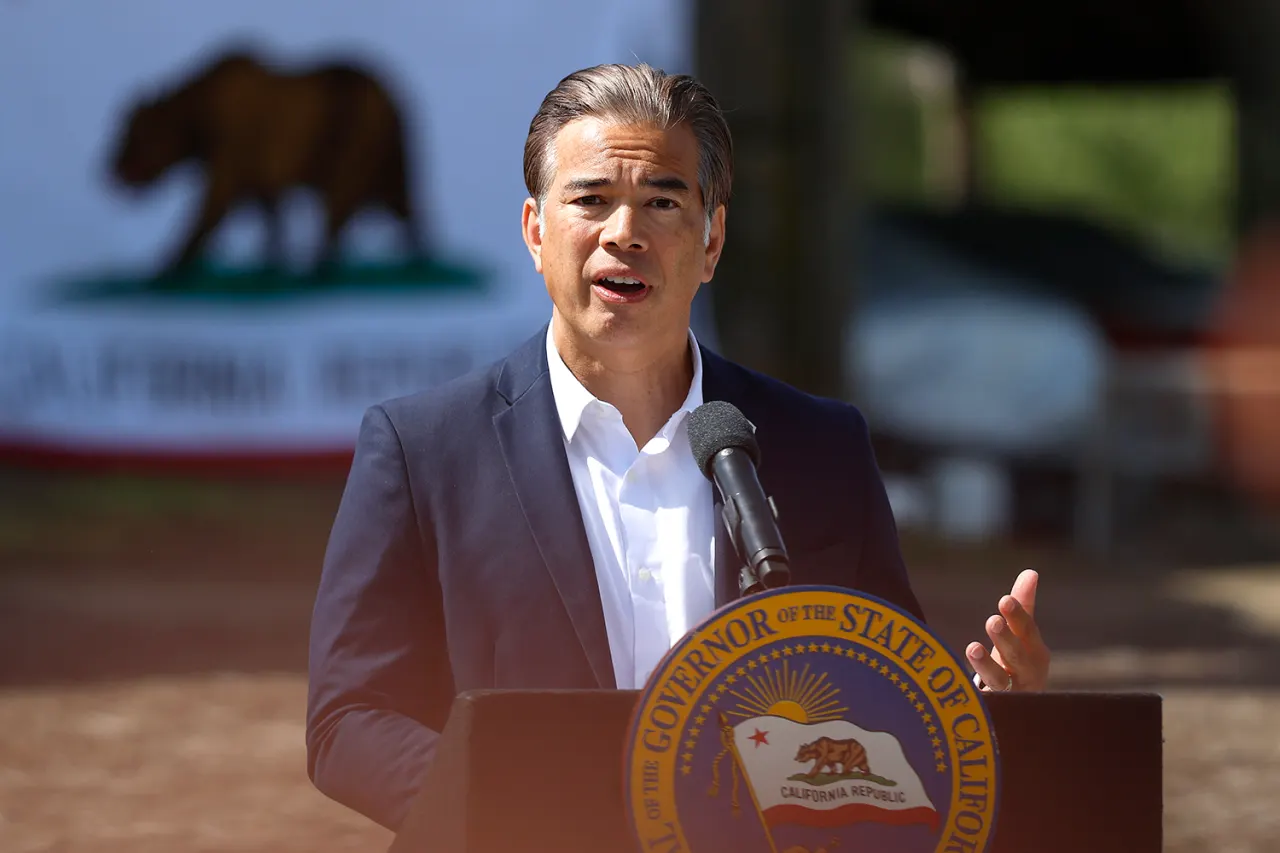
Iowa Attorney General Brenna Bird escalated a row over the blocked Paramount–Warner Bros. Discovery merger by declaring, in a Daily Wire op-ed, that she intends to sue California, accusing it of acting as a de facto national regulator and driving up costs for consumers nationwide. She framed the row as an interstate dispute that only the US Supreme Court can hear, though it remained unclear whether she had filed any formal paperwork or held legal standing to do so; the threat appeared aimed at pressuring California's attorney general, Rob Bonta, back to the negotiating table rather than at securing an immediate court date.
The underlying case dates to July, when Bonta and eleven other state attorneys-general sued to block the merger after the Department of Justice had approved it. A planned settlement meeting between the AGs and Paramount collapsed at the last minute after Bonta accused the studio of leaking details of the talks, an allegation Paramount denied; Bonta responded that no further talks were scheduled until the leaks stopped. Bird argued the merger would create a stronger rival to Netflix, citing an estimated $6 billion in savings and a pledge to release at least 30 films in cinemas annually, and warned that prolonged uncertainty, plus a reported $7 million ticking fee, risked freezing production decisions at both studios indefinitely. No further developments have emerged since, leaving the dispute unresolved.
- Iowa's AG threatens to sue California over the Paramount–Warner Bros. merger block
- She calls it an interstate dispute only the Supreme Court can hear
- Settlement talks between state AGs and Paramount collapsed amid leak accusations
New here? Start with this
Iowa and California are locking horns over one of the biggest media mergers in years: the proposed combination of Paramount and Warner Bros. Discovery, the companies behind Paramount+ and HBO Max. California's attorney general, Rob Bonta, along with attorneys-general from eleven other states, has sued to block the deal, even though the US Department of Justice has already approved it. Iowa's attorney general, Brenna Bird, argues that California has no right to set nationwide merger policy and wants the dispute settled by the US Supreme Court instead.
The clash matters because it pits state-level legal power against federal oversight of a deal that would reshape the streaming and film industry, at a time when traditional media companies are trying to compete with Netflix. Supporters of the merger say it would create savings and keep the combined studio competitive, while opponents worry about reduced competition and its effects on jobs and productions. The outcome could also set a precedent for how much say individual states have over mergers the federal government has already cleared.
Both sides, in good faith
The strongest fair case each way — we don't pick a winner.
The case for
Advocates of the merger and of Iowa's intervention argue that a single state attorney general should not be able to unilaterally veto a transaction the Department of Justice has already reviewed and approved, particularly one with implications for interstate commerce and companies operating nationwide. They contend that combining Paramount+ and HBO Max is essential to building a studio capable of competing with Netflix, pointing to projected savings of roughly six billion dollars and a pledge of at least thirty theatrical releases a year as evidence of genuine industrial benefit. From this vantage point, prolonged uncertainty and reported daily costs of seven million dollars are needlessly jeopardising jobs and productions, so framing the dispute as an interstate matter properly resolved by the Supreme Court is a legitimate way to seek clarity and move the deal forward.
The case against
Defenders of California's lawsuit argue that state attorneys general retain independent authority to enforce antitrust law even after federal approval, and that a coalition of twelve states acting together reflects considered, broad-based concern rather than a single official overstepping her remit. They point to the historical pattern of media consolidation reducing competition, narrowing consumer choice and ultimately costing jobs despite pre-merger assurances, arguing that scrutiny of a deal this size serves the public interest regardless of the DOJ's position. On this view, Iowa's threatened Supreme Court challenge – whose procedural basis remains unclear – looks more like a pressure tactic to force California back to the table than a substantive legal remedy, and Bonta's account of leaked negotiations, if accurate, would justify caution about resuming talks on the studio's terms.
Full account
Iowa's Republican Attorney General, Brenna Bird, has said she intends to sue California at the US Supreme Court over its role in a multi-state antitrust case seeking to block the merger of Paramount and Warner Bros. Discovery. Writing in an opinion piece for the conservative outlet The Daily Wire, Bird argued that California, under Attorney General Rob Bonta, was again trying to act as "the country's regulator" and was driving up costs for ordinary Americans by holding up the roughly $111 billion (£87 billion) deal. Because the dispute is between states, she contended, it falls under the US Constitution's provision that such cases can only be heard by the Supreme Court.
Bird's central argument is economic: she says streaming subscriptions have become too expensive and viewing choice too thin because one company, which she does not name but which reporting identifies as Netflix, has pulled too far ahead of rivals for others to compete. A combined Paramount and Warner Bros. Discovery, she wrote, would still trail Netflix, Disney and Amazon, but could unlock an estimated $6 billion in savings for reinvestment and would come with a public pledge to release at least 30 films in cinemas every year, benefiting audiences, small-town theatres and production crews alike. She also pointed to a $7 million-a-day fee that Paramount is contracted to pay Warner Bros. Discovery shareholders if the deal is delayed, warning that prolonged legal uncertainty is freezing both companies' ability to plan productions, sign contracts or invest, with the risk that films shelved now may never be made regardless of how a future court rules.
Coverage of Bird's intervention diverged sharply in tone. The Daily Wire's own account largely reported her arguments at face value, noting that the threat of Supreme Court action might be enough to draw Bonta back to settlement talks; a sit-down between the state attorneys-general and Paramount had reportedly been arranged for the Monday before Bird's op-ed appeared, only for Bonta to cancel it at the last minute, accusing the studio of leaking details of the negotiations. Trade outlet Deadline, by contrast, treated the threatened lawsuit far more sceptically, observing that Bird did not appear to have actually filed any papers with the Supreme Court and questioning whether the court's rarely used "original jurisdiction" process for state-versus-state disputes could realistically produce a ruling before the case's scheduled March 2027 trial in an Oakland federal court, particularly given that the justices do not reconvene until early October and such cases typically require a special master's review first.
Deadline's report also supplied context largely absent from Bird's op-ed, noting that the underlying suit was brought not just by California but by twelve states including New York, whose attorney-general Letitia James went unmentioned in Bird's piece, as well as the Writers Guild of America, and that some 68 regulators had already cleared the transaction before this challenge. It suggested Bird's move looked politically motivated, pointing to her past support for Donald Trump, her own re-election campaign, and dueling opinion pieces in which Paramount chief executive David Ellison had accused Bonta of bad faith while Bonta, in his own guest column, described the case as "a straight up antitrust enforcement case" that was, in his words, "very cut and dry."
Where outlets differ
The Daily Wire's report presents Bird's economic case for the merger (lower prices, more theatrical releases, industry uncertainty) largely without challenge, and frames the Supreme Court threat as a plausible lever to restart settlement talks.
Deadline is far more skeptical, stressing that Bird had not actually filed suit, casting doubt on whether the Supreme Court's original-jurisdiction process could move fast enough to matter, and framing the whole gambit as likely politically motivated given Bird's ties to Trump and her re-election bid.
Deadline provides fuller context the Daily Wire piece omits or downplays, including the deal's roughly $111 billion value, the involvement of New York AG Letitia James and the Writers Guild of America among the 12 plaintiff states, and competing op-eds from Paramount's CEO and from Bonta himself.
The Daily Wire account includes detail on a cancelled Monday meeting between the state AGs and Paramount, with Bonta accusing the studio of leaking information, which is not mentioned in the Deadline excerpt provided.