Trump declares Palestine Action a global terror group: UK organisation will face same sanctions as Hamas, al-Qaeda and Isis with supporters banned from US for life
Developed over time first seen 2 months ago
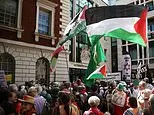
Donald Trump has designated Palestine Action a global terrorist organisation, placing the British-based group on the same US list as Hamas, al-Qaeda and Islamic State. The move means the group's assets, including property and bank accounts, will be frozen, and its supporters could face a lifetime ban from entering the United States, while American citizens will be barred from doing business with it. The designation follows the UK's own proscription of the group under the Terrorism Act 2000, which the Court of Appeal ruled lawful in June after an earlier High Court decision had quashed the ban.
The US Treasury accused Palestine Action of supporting "numerous acts of terrorism" since its founding in July 2020 by British citizens Richard Barnard and Huda Ammori, and said it had encouraged similar tactics internationally, including near the US-Mexico border. Treasury Secretary Scott Bessent said the government would "cut the financial lifelines" of such groups. In the UK, more than 2,700 people have been arrested under terrorism legislation since the group's ban began in July last year, including 1,855 charged over placards in Parliament Square, with many cases adjourned until 26 October pending a further appeal. Co-founder Huda Ammori called the US designation "hypocritical", while Ammori may still take the UK proscription to the Supreme Court.
- Trump designates Palestine Action a global terrorist group, matching Hamas and al-Qaeda status
- Assets frozen; supporters risk lifetime US entry ban
- Follows UK's own ban and over 2,700 UK arrests since July 2024
New here? Start with this
Palestine Action is a British group founded in 2020 by Richard Barnard and Huda Ammori. It campaigns against companies it says are involved in supplying weapons to Israel, and its actions have included entering and damaging sites linked to those companies.
The UK government banned the group under the Terrorism Act 2000, a decision upheld by the Court of Appeal after an earlier court ruling against the ban. The ban has led to arrests and legal challenges, and Ammori may seek a further appeal.
The United States can impose its own sanctions through terrorist designations. These can freeze a group’s assets and restrict financial dealings with it, while affecting whether people associated with it can enter the US.
Both sides, in good faith
The strongest fair case each way — we don't pick a winner.
The case for
Governments have identified a pattern of coordinated disruption and property actions that, properly assessed, constitute support for terrorism and warrant formal designation under existing legal frameworks. Supporters of this position emphasise that states have a legitimate duty to prevent material support for designated terrorist organisations, and that two separate legal processes—UK courts and US administration—have independently concluded such designation is justified.
The case against
Critics argue that property-based activism and disruptive protest, however illegal, remain fundamentally distinct from terrorism and that equating Palestine Action with organisations responsible for mass civilian casualties dangerously extends counter-terrorism frameworks to suppress political speech. They contend the designation risks criminalising peaceful dissent under security pretexts, particularly given concerns that the classification reflects current geopolitical alignment rather than neutral assessment of genuine security threats.
Full account
US reports said the Trump administration had imposed counter-terrorism sanctions on Palestine Action, a UK-based protest group already proscribed in Britain. The measures were described as placing it alongside organisations such as Hamas, al-Qaeda and Islamic State for US sanctions purposes.
According to the reports, property or financial interests linked to Palestine Action within US jurisdiction would be blocked, and US citizens and businesses would be barred from providing it with money, goods or services. They also said the action could restrict travel to the United States for leading figures and, potentially, supporters, although the precise scope for individual supporters was not set out consistently.
The administration alleged that the group had supported or encouraged terrorist activity and had promoted tactics online for use internationally. Treasury Secretary Scott Bessent was quoted stressing the use of financial powers against what he called political terrorism; the second report also attributed a broader statement on far-left terrorism to Secretary of State Marco Rubio.
Palestine Action was founded by Richard Barnard and Huda Ammori and has targeted sites and companies it says are connected to Israel. The reports link the UK proscription to direct-action incidents, including damage at RAF Brize Norton, and note continuing legal and criminal proceedings in Britain. Source 1 says the Court of Appeal upheld the UK ban in June, while indicating that a further Supreme Court challenge remained possible.
Where outlets differ
Source 1 foregrounds the US Treasury action, Bessent's comments, the Court of Appeal ruling and figures for UK arrests and placard-related prosecutions. Source 2 foregrounds Rubio's statement, describes the case as the first known US counter-terrorism sanctioning of a British hard-left activist group, and makes broader claims about possible sanctions or visa bans for Britons involved in funding or protests.
Source 2 says the UK proscription followed the RAF Brize Norton incident in June 2025; Source 1 instead concentrates on the subsequent litigation over the ban.
Both main texts give July 2020 as the founding date. However, a photo caption within Source 1 says Barnard and Ammori co-founded the group in July 2022, creating an internal inconsistency.
Neither supplied report includes a source URL, so no links can be provided.