UK launches plug-in balcony solar panels for flats and renters
Developed over time first seen 2 months ago
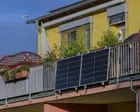
Plug-in balcony solar panels are to go on sale in the UK, beginning with Argos and followed by other major retailers, allowing more flats and rented homes to generate some of their own electricity. The rollout could widen access to solar power beyond households with suitable roofs, potentially reducing electricity bills and demand for grid power generated from gas or imports.
The 800-watt systems, expected to cost about £400 to £500, plug into a standard socket and can be installed on balconies, terraces or other outdoor spaces; average annual savings are estimated at up to £110. Actual savings will depend on weather, panel orientation and using electricity while it is generated, while buyers may need landlord or planning consent, must register systems with the National Energy System Operator, and should check electrical and mounting safety.
- Plug-in solar panels will broaden UK access to self-generated electricity.
- Systems cost about £400 to £500 and may save up to £110 yearly.
- Buyers must consider permissions, registration and safety.
New here? Start with this
Balcony solar panels are small solar power systems designed for homes without their own roof space. They usually consist of one or two panels fixed to a balcony, wall or garden structure, connected to a small device that allows the electricity to be used in the home.
They are aimed particularly at people living in flats and rented homes, who may not be able to install conventional rooftop panels. Renters will normally need their landlord’s agreement for changes to a property, while leaseholders may also need permission from a building owner or management company.
Solar panels generate most electricity in direct daylight, so their usefulness depends on where they are placed and how much of the power is used immediately. The systems also need to meet safety and electricity-network rules, as homes remain connected to the wider grid when their panels are not producing enough power.
Both sides, in good faith
The strongest fair case each way — we don't pick a winner.
The case for
Supporters argue that plug-in balcony solar is a practical way to extend the benefits of clean, self-generated electricity to renters and flat dwellers who have largely been excluded from rooftop schemes. At a relatively modest upfront cost, it can cut bills, reduce demand on the grid at peak daylight hours and give households more control over their energy use, while registration and safety requirements provide proportionate safeguards. They see it as a useful incremental reform rather than a substitute for larger-scale renewables or home insulation.
The case against
Critics argue that the likely savings are modest and uncertain relative to the upfront cost, especially in the UK climate or for homes with shaded or poorly oriented balconies. They also worry that plug-in systems could be misunderstood as simple consumer appliances despite risks around insecure mounting, unsuitable electrical installations, landlord disputes and unequal access for those without safe outdoor space. From this perspective, policy effort may be better focused on professionally installed solar, insulation and targeted support for low-income households, which could deliver more reliable and equitable reductions in energy bills.
Full account
Plug-in solar panel kits are due to be sold in the UK from Thursday after a change in the rules cleared the way for small systems that connect to a standard domestic socket. The products are intended to widen access to solar generation for people who cannot install conventional rooftop arrays, including some flat-dwellers and tenants with suitable balconies, terraces, gardens or outbuildings. Argos is expected to be the first major retailer to stock them, while other retailers are anticipated to follow.
The systems typically use panels linked to a microinverter, which converts their output into electricity for use in the home. Their output will be capped at 800 watts, far below that of a normal rooftop installation. This means they cannot independently run a household, but can reduce grid electricity bought during daylight hours, particularly for appliances that are continuously drawing power. The government says a household could save roughly £70 to £110 a year, although this will vary with weather, orientation, shading and whether electricity is used as it is produced.
The kits are presented as a lower-cost, simpler alternative to roof-mounted solar because they do not normally require professional installation. However, consumers have been advised to have existing wiring assessed for safety before connecting one. They must also be registered, allowing the National Energy System Operator to understand their aggregate effect on demand. Excess power may flow back to the grid, but these systems will not usually receive Smart Export Guarantee payments because they are not generally certified under the Microgeneration Certification Scheme.
The policy reflects the established use of comparable ‘balcony power’ systems in parts of continental Europe, notably Germany and Spain. It may give more households a direct stake in renewable generation, while offering only limited bill reductions rather than a full substitute for grid supply. The eventual value will depend on product prices and practical conditions at each property; a sunny, unshaded, south-facing position and daytime electricity use are likely to produce the greatest benefit.
Where outlets differ
Source 1 places greater emphasis on access for renters and people without rooftop rights, the expected expansion to retailers including Amazon, Currys, B&Q and Screwfix, and an estimated starting price of about £400 to £500. Source 2 gives current example prices from UKSOL of £699 for one panel and £1,089 for two, while saying competition could bring typical prices to £400-£600.
Source 2 gives more consumer and technical detail: professional wiring checks, the 800-watt microinverter limit, use alongside grid electricity for high-demand appliances, export-payment eligibility and the preference for an unshaded south-facing location. Source 1 focuses more on registration with the system operator and the potential reduction in gas-fired generation or electricity imports.
Both reports stress that savings depend on local conditions and daytime consumption. Source 1 estimates savings of up to £110 a year, whereas Source 2 presents a £70-£110 range and links the policy more explicitly to concern over volatile overseas fuel costs.
More coverage
Art Business Celebrity Culture Entertainment Markets UK World
Read the full article at the source →
Originally published by The Guardian as “Plug-in balcony solar panels to go on sale in UK for first time”.