Yayoi Kusama’s psychedelic art was at its best when taken in high doses
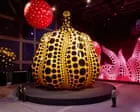
The article offers a mixed appraisal of Yayoi Kusama following her death at 97, arguing that her immersive installations can be exhilarating when experienced at scale but often feel empty in isolation. It considers her global popularity significant because her dotted pumpkins, tentacles and mirror rooms have become defining images of contemporary art’s social-media and luxury-market era.
The writer recalls initially finding Kusama’s dots static beside abstract artists such as Jackson Pollock and Piet Mondrian, but later being won over by a large Manchester presentation at Aviva Studios. They argue that her work’s cheerful decorative appeal sits uneasily with her troubled life and anti-war activism, and contend that artists such as Bridget Riley offer greater visual and intellectual complexity; nevertheless, Kusama’s sensory excess is presented as an apt reflection of the present age.
In short
- Kusama’s immersive art worked best at overwhelming scale.
- Her popularity reflects contemporary art’s commercial, social-media culture.
- The writer preferred Pollock and Riley’s more complex abstraction.
Explained simply
Yayoi Kusama was a Japanese artist whose work became known internationally for repeated dots, pumpkin sculptures and rooms filled with mirrors and lights. These immersive installations surround visitors with patterns and reflections, making the experience different from seeing a single artwork in a gallery.
Kusama’s art draws on her personal struggles and has also been linked to her anti-war activism. Her bright, recognisable images have become popular around the world, appearing in galleries and on social media, and have attracted interest from luxury brands and collectors. That popularity has prompted debate about whether the work is mainly decorative or offers a deeper artistic experience.