Trump’s helicopter pilots were warned about communications failures one week before Marine One flew too close to jet
Developed over time first seen 2 months ago
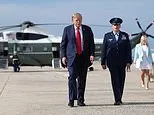
A preliminary US safety investigation found that communication failures contributed to Marine One and a departing passenger jet operating too close together near Ronald Reagan Washington National Airport on 4 August. The incident exposed continuing coordination problems between military helicopter operations and air traffic control in heavily congested Washington airspace, despite safety measures introduced after the fatal 2025 mid-air collision near the airport; officials said President Trump was never in danger.
A week beforehand, controllers and Marine One’s pilots had discussed missing three-minute advance-warning calls and agreed a back-up arrangement, but it also failed on the day. The National Transportation Safety Board said the aircraft came within just over 0.8 miles laterally and around 700 feet vertically; separate recordings suggest Marine One made its warning calls, although they were absent from official tower recordings, and the helicopter paused after its crew saw the aircraft.
- Communication failures preceded Marine One’s close encounter with a passenger jet.
- The aircraft came within 0.8 miles and 700 feet.
- Officials said President Trump was never in danger.
New here? Start with this
Marine One is the call sign used for any US Marine Corps helicopter carrying the president. It often flies in and around Washington, where Reagan National Airport is close to government buildings and busy air routes used by commercial airlines.
Air traffic controllers direct aircraft in this crowded airspace and rely on radio contact and agreed procedures to keep them apart. Pilots are normally told in advance about nearby aircraft, with back-up ways of sharing that information if radio communications fail.
The incident is being examined by the National Transportation Safety Board, the independent US agency that investigates transport accidents and serious safety events. It also comes after a fatal collision in the Washington area in 2025, which led to further attention on how helicopters and passenger aircraft are coordinated.
Both sides, in good faith
The strongest fair case each way — we don't pick a winner.
The case for
The prior discussion of communication failures, followed by the failure of an agreed back-up warning method, reasonably suggests a continuing systemic weakness in coordination around presidential helicopter movements. In exceptionally congested airspace near a major airport, advocates of stronger action would argue that known communications problems demand rigorous testing, clear accountability and genuinely independent redundancy, because near misses can expose hazards before they become tragedies.
The case against
A preliminary finding of communication difficulties does not by itself establish that the safeguards were inadequate overall or that the incident reflected broader institutional failure. The pilots saw the departing jet, delayed the helicopter and maintained meaningful separation, while officials say the president was not at risk; advocates of this view would argue that these outcomes show layered safety procedures and professional judgement working as intended, pending a full investigation.
Full account
Federal investigators say air traffic controllers and Marine One’s pilots discussed recurring communications problems a week before a close-approach incident involving the presidential helicopter and a departing passenger aircraft near Ronald Reagan Washington National Airport on 4 August. The preliminary findings from the National Transportation Safety Board concern the advance notification normally given before the president’s helicopter departs.
Under a long-standing Pentagon and Federal Aviation Administration arrangement, controllers are meant to receive roughly three minutes’ notice before such a flight. Controllers had said they were not consistently receiving that call, and the two sides agreed that it could be passed through another facility when necessary. Investigators said that back-up arrangement also failed on the day of the incident.
Marine One, carrying President Donald Trump, left the White House for Joint Base Andrews as an Envoy Air flight departed Reagan National. The FAA has said the aircraft came briefly closer than intended, although officials said the president was not in danger. Preliminary NTSB estimates put their nearest separation at just over 0.8 miles horizontally and about 700 feet vertically. Marine One’s crew saw the airliner and held position while it climbed away; the airliner’s crew received a collision-avoidance alert but did not see the helicopter.
The event occurred in tightly managed and congested Washington airspace, where military, government and commercial operations overlap. It also raised questions about procedures introduced after the January 2025 collision between an airliner and an Army Black Hawk near Reagan, which killed 67 people. Those measures were intended to stop airport departures and arrivals when helicopters use potentially conflicting routes. The report notes an apparent discrepancy between official tower recordings, which did not capture Marine One’s warnings, and separate recordings published by ATC.com that appear to contain them.
Where outlets differ
The two supplied reports are substantively identical and place the same emphasis on the failed warning process, the aircraft separation and assurances that the president was not in danger. Neither supplied extract identifies a distinct outlet or provides a URL.