Carney rejects Trump bid to rename Lake Ontario
Developed over time first seen 2 months ago
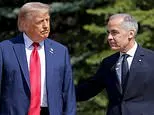
Canadian Prime Minister Mark Carney rejected President Donald Trump’s order to refer to Lake Ontario as “Lake America” for US federal purposes, saying Canadians would continue to use its longstanding name. The dispute matters because the lake straddles the US–Canada border and the move adds a symbolic argument over national identity and geography to wider tensions between the two countries.
Trump signed the order on Thursday, directing the Interior Department to update the federal Geographic Names Information System, but it cannot require Canada or international bodies to adopt the new name. Carney said “Ontario” derives from the Wendat word “Ontari’io” and noted the name is more than 400 years old, predating both Canadian Confederation and US independence; Lake Ontario has also been jointly managed under the 1909 Boundary Waters Treaty.
- Carney rejects Trump’s “Lake America” designation for Lake Ontario.
- The US order applies only to federal usage.
- The lake is shared by Canada and the United States.
New here? Start with this
Lake Ontario is one of North America’s five Great Lakes and lies on the border between Canada and the United States. It is shared by the Canadian province of Ontario and the US state of New York, and is an important route for shipping, water supply and local economies.
The lake’s name has long been used in both countries and is linked to a Wendat word. Because it crosses an international boundary, its waters are covered by agreements between Canada and the US, including the 1909 Boundary Waters Treaty.
US presidents can direct the names used by federal agencies, but cannot require Canada, other countries or international mapmakers to use the same wording. The disagreement comes at a time when relations between the two neighbours have also been under pressure over trade.
Both sides, in good faith
The strongest fair case each way — we don't pick a winner.
The case for
Canada has a strong case for retaining Lake Ontario’s established name: it reflects Indigenous linguistic heritage, centuries of common usage and a shared international waterway governed with the United States. A unilateral US federal naming decision cannot reasonably determine Canadian or international terminology, and resisting it affirms sovereign equality at a time when bilateral relations are strained. Supporters would argue that stable, mutually recognised geographical names are part of respectful cross-border co-operation rather than a trivial matter of symbolism.
The case against
Supporters of the US order could argue that a president is entitled to set the terminology used by US federal agencies and records, particularly for a geographical feature bordering the United States. They may see “Lake America” as a patriotic branding choice aimed at expressing national identity, without claiming legal power over Canada’s maps, institutions or speech. On this view, Canada can retain its own usage while the United States exercises discretion over its internal administrative nomenclature.
Full account
Canadian Prime Minister Mark Carney has rejected Donald Trump’s order for US federal agencies to refer to Lake Ontario as “Lake America”, responding with a statement that placed the dispute in a longer historical and Indigenous context. Trump signed the order on Thursday, saying the change would take effect immediately in the United States. The lake is shared by Canada and the US, bordering Ontario and New York state.
Carney said the existing name derives from the Wendat word “Ontari’io”, associated with the idea of a large, beautiful lake. He stressed that the name has been in use for more than four centuries, before both Canadian Confederation and the US declaration of independence. His conclusion was unequivocal: Canadians, he said, would continue to call it Lake Ontario.
The Canadian leader also linked the naming row to wider changes in US policy under Trump, referring to shifts in trade, foreign policy, national symbols and geographical names. The exchange comes amid a worsening trade dispute: one report says recent talks collapsed and the US imposed 50% tariffs on C$28bn worth of Canadian goods, with Canada planning equivalent counter-tariffs the following month.
Trump has considerable scope to direct how US federal bodies record domestic geographical names, and the order reportedly gives the Interior Department 30 days to amend the official US names database. But it cannot require Canada, other governments or international organisations to accept the new label. There is no single universally binding authority for naming shared international waters. The argument echoes Trump’s earlier attempt to relabel the Gulf of Mexico as the Gulf of America, a change rejected by Mexico and reflected differently by mapping services in different countries.
Where outlets differ
Source 1 presents Carney’s response as a pointed rebuke and gives greater weight to the partisan reaction in the US, including enthusiasm among Trump supporters and criticism from opponents. Source 2 is more explanatory, focusing on the legal and practical limits of a US-only renaming and comparisons with the Gulf of Mexico dispute.
Source 2 provides specific trade-tariff figures and notes supporting comments from Ontario Premier Doug Ford and other Canadian officials. Source 1 instead emphasises Trump’s Oval Office remarks and suggests he joked about possible future changes to other bodies of water.
Both reports agree on the central facts: Trump ordered the US federal renaming, Carney rejected it, and the Lake Ontario name has Indigenous roots and a history of more than 400 years.
More coverage
- BBC World — Trump signs order to rename Lake Ontario as Lake America
- Fox News — Hillary Clinton's dig at Trump over Lake Ontario name change sparks viral backlash: 'Shooting blanks'
- Fox News — House Dem Debbie Dingell places Trump's Lake Ontario name change in the crosshairs
- The Hill — Carney: 'Naming reality means calling it Lake Ontario'
Americas Government Politics World
Read the full article at the source →
Originally published by Daily Mail as “Canada’s Mark Carney tries to give Trump a ‘reality’ check as he rejects the renaming of Lake Ontario”.