Matt Lucas and Hugh Bonneville among actors calling for law on AI voice cloning
Developed over time first seen 2 months ago
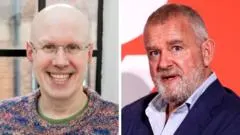
More than 80 performers, including Matt Lucas, Hugh Bonneville and Nicola Coughlan, have urged the UK government to give everyone a legal right to own their voice, citing the growing use of AI voice cloning without consent. They argue that existing law does not adequately protect people’s voices, faces or identities, creating risks to performers’ livelihoods and to public trust in human-made work.
Campaign co-founder and audiobook narrator Alice Sockett called unauthorised cloning an existential threat to her industry, while signatories said voices embody personal identity and experience. The government said it recognised both the creative potential and possible harms of digital replicas, and planned a consultation; the technology can also benefit people who have lost their speech through illness.
- Performers seek legal ownership rights over their voices.
- More than 80 people signed the appeal.
- Government plans consultation on AI replica harms.
New here? Start with this
AI voice cloning uses software trained on recordings of a person speaking to produce new speech that sounds like them. It can be used in entertainment, audiobooks, adverts and assistive technology, but it can also create convincing recordings without the speaker’s permission.
Actors, narrators and other performers often depend on their distinctive voices for work. In the UK, there is no single, clear legal right allowing someone to control all uses of their voice or likeness, so disputes may rely on a mix of existing rules.
The debate concerns how to protect people from impersonation and lost income while allowing beneficial uses of the technology. The government is considering whether current laws need changing as AI tools become more widely available.
Both sides, in good faith
The strongest fair case each way — we don't pick a winner.
The case for
A clear legal right over one’s voice could close gaps in existing protections and give performers practical control over a core part of their identity and livelihood. Advocates argue that consent, fair payment and effective remedies are especially important when a convincing replica can be made and reused at scale, potentially misleading audiences or replacing paid work. They see targeted rules as a safeguard for dignity, trust and a sustainable creative sector.
The case against
A broad ownership right could be difficult to define and risk restricting legitimate uses of synthetic speech, parody, research and accessible assistive technology. Critics may argue that the law should focus on demonstrable harms such as fraud, deception, privacy breaches and contractual misuse, using proportionate remedies rather than creating an expansive new property right. This approach seeks to preserve innovation and the benefits of voice technology, including for people who have lost their speech, while still addressing abuse.
Full account
More than 80 performers and creative-industry figures have urged the UK government to introduce specific legal safeguards against artificial-intelligence voice cloning. The campaign, called Save Our Voices Now, has been backed by actors Matt Lucas, Hugh Bonneville and Nicola Coughlan, alongside Siobhán McSweeney, Luke Evans, Pearl Mackie, comedian Jen Brister and others. Its central demand is for a legal right that would allow every person in the UK to control the use of their own voice.
The signatories argue that existing protections do not adequately address systems trained on recordings of real people to produce convincing synthetic speech. Audiobook narrator Alice Sockett, a co-founder of the campaign, said the technology posed a serious threat to voice-based work, particularly as recordings may be publicly available while performers retain limited control over their reuse. The campaign’s concern is that a cloned voice could be deployed commercially or deceptively without consent, payment or meaningful recourse.
Bonneville described a voice as part of a person’s identity, while McSweeney said rules, contracts and artistic rights were not keeping pace with technological development. She did not reject AI outright, arguing that it could be used constructively if people remained central to its use; her concern was that it might instead displace performers. Singer Sandi Thom likewise framed a voice as inseparable from an individual’s lived experience and expression.
The reports also set the campaign within a broader debate over the possible benefits and risks of voice replication. The BBC noted that synthetic voices can be valuable for people who have lost their ability to speak, citing an example involving motor neurone disease, and referred to uses of digital representations after death. Variety, meanwhile, highlighted differing approaches within entertainment: some performers have sought posthumous protections, whereas Gene Wilder’s estate approved the recreation of his voice for a Netflix programme. The government response reported by the BBC said it recognised both creative uses and potential harms, and intended to consult on the issue.
Where outlets differ
The BBC report gives greater attention to non-entertainment uses of voice cloning, including assistive communication for people who have lost their voices and digital appearances after death; Variety concentrates on industry examples and estates’ choices about posthumous use.
Variety identifies additional named supporters and includes Bonneville’s statement, while the BBC includes Sandi Thom’s comments and a government spokesperson’s response.
The BBC refers to earlier legal concerns that UK law may not fully protect voice, face or identity. Variety instead places the campaign in the context of other actors and estates making individual arrangements over synthetic voices.
More coverage
AI Celebrity Entertainment Government Politics Technology UK World