In Latest Threat Of Regulatory Retaliation, Donald Trump Says He’ll Report NBC News’ Kristen Welker To FCC For “Rebuke Or Punishment”
Developed over time first seen 2 months ago
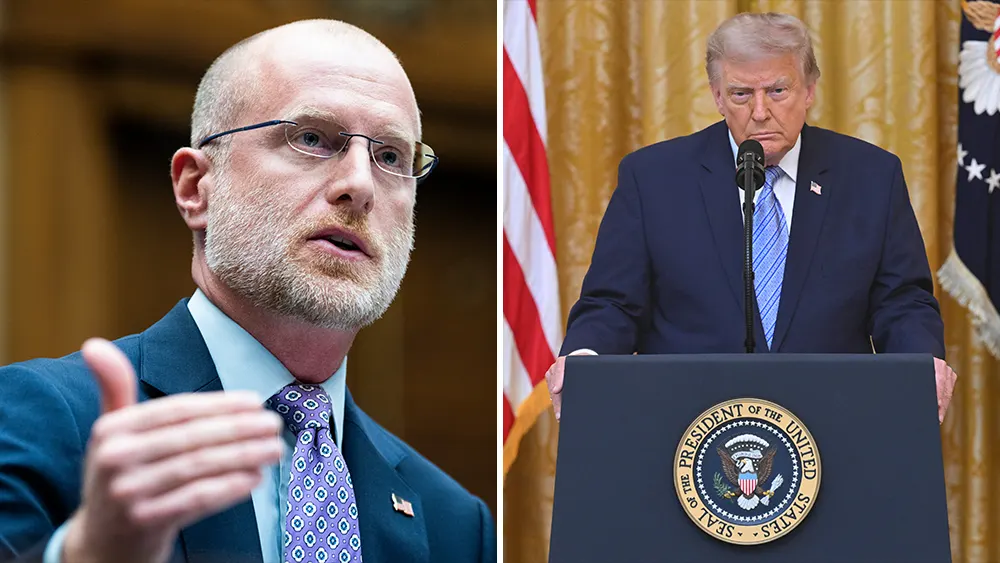
Donald Trump has said he will report NBC News' Meet the Press moderator Kristen Welker to the Federal Communications Commission for "rebuke or punishment" after she described his record of political endorsements as producing "mixed results." The row matters because it comes as the FCC, under chairman Brendan Carr, already faces a First Amendment lawsuit from ABC accusing the regulator of using licensing powers to retaliate against unfavourable news coverage, raising fresh concerns about press freedom and political pressure on broadcasters.
Welker made her comment on Washington affiliate WRC-TV, not on Meet the Press itself, noting Trump's endorsees had fared unevenly in primaries. Her assessment was borne out by results: while his pick Darline Graham won her South Carolina Senate primary, other endorsed candidates lost, including Mike Lindell in Minnesota's governor race, Rep. Andy Ogles in Tennessee, Rep. Randy Feenstra in Iowa's governor primary and Burt Jones in Georgia's governor primary. NBC has defended Welker, calling her "one of the best in the business," while the FCC, responding to ABC's separate suit over its demand that the network's eight owned stations undergo early licence renewal, maintained that "all broadcasters have a legal obligation to operate in the public interest—even Disney." A judge is due to hear arguments in October on ABC's bid for a restraining order against that FCC order.
- Trump threatens to report NBC's Kristen Welker to the FCC
- Several Trump-endorsed candidates have lost recent primaries
- Row echoes ABC's separate lawsuit alleging FCC retaliation
New here? Start with this
NBC News host Kristen Welker moderates the network's flagship Sunday politics programme, Meet the Press, and made remarks on a separate Washington DC affiliate broadcast describing Donald Trump's record of endorsing political candidates as mixed. Trump has disputed this, insisting his endorsement success rate is far higher, and has said he wants the matter examined by the Federal Communications Commission, the US federal body that regulates broadcasters and can affect their licences.
The FCC's chairman is Brendan Carr, a Trump appointee, and the row comes at a time when the commission is already facing scrutiny over its relationship with news broadcasters. It is separately being sued by ABC, which alleges the FCC took retaliatory action against it over its news coverage, with a court hearing due in October. Because the FCC has real regulatory power over broadcast licences, complaints of this kind raise questions about whether such power could be used to pressure or punish news organisations over their coverage.
This matters because it touches on the independence of the press from government influence, a principle protected in the US by the First Amendment. NBC News has stood by Welker, and the episode is being watched as part of a wider pattern of tension between the Trump administration and news broadcasters it considers unfavourable.
Both sides, in good faith
The strongest fair case each way — we don't pick a winner.
The case for
Those sympathetic to Mr Trump's complaint would argue that public figures are entitled to push back robustly when they believe a broadcaster has mischaracterised their record, and that flagging the matter to a regulator is simply invoking an existing oversight channel rather than an improper threat. They would point out that broadcasters carry public interest obligations around accuracy, and that a phrase such as "mixed results" can understate a genuinely strong overall win rate if taken out of context. On this view, holding journalists to precise standards, especially when their words may shape public perception of a president's political standing, is a legitimate exercise of scrutiny rather than intimidation.
The case against
Press freedom advocates would counter that Ms Welker's comment was a fair, evidence-based observation, grounded in specific named losses, and falls squarely within ordinary political analysis rather than factual error. They would argue that a president threatening to direct a regulator against a named journalist over an interpretive remark risks chilling legitimate reporting and blurs the line between correcting the record and wielding state power to punish unwelcome coverage. Set alongside the FCC's separate licensing dispute with ABC, they would see this as part of a troubling pattern in which regulatory leverage is used against broadcasters whose journalism displeases the administration, a concern that goes to the heart of editorial independence in a free press.
Full account
Donald Trump has said he intends to report NBC News anchor Kristen Welker to the Federal Communications Commission (FCC) for what he called a “purposeful inaccuracy” about his record of endorsing political candidates ahead of America's midterm elections. In a lengthy post on Truth Social on Sunday, the US president branded Welker the “Unpopular ‘Hostess’” of Meet the Press, describing the long-running Sunday politics programme as “Meet the Fake Press”, and said she should face “rebuke or punishment” from the regulator over comments she had made about his endorsement record.
The remarks that provoked Trump's anger were not made on Meet the Press itself, but during a local preview segment on NBC's Washington affiliate, WRC-TV, in which Welker said the president had achieved “mixed results” with his primary endorsements, while also stressing that he would “loom large” over the coming midterms. She specifically pointed to the recent primary win of Senator Darline Graham, backed by Trump, as a success. In his social media post, Trump insisted his endorsement record was in fact close to perfect, citing what he said was a 100% success rate in Senate races and a 98% rate in House races, and accused “Radical Left News” outlets more broadly of trying to “harass, demean, and libel” him.
Both accounts note that Welker's characterisation appears to be factually defensible: while Graham's win was indeed a recent success, several other high-profile Trump-endorsed candidates have lost primary contests this cycle, including Mike Lindell in Minnesota's gubernatorial race, Tennessee congressman Andy Ogles, Randy Feenstra in Iowa's gubernatorial primary, and Burt Jones in Georgia. NBC News defended its anchor, issuing a statement calling Welker “one of the best in the business” and confirming its continued backing of her. The dispute lands against the backdrop of an already tense relationship between the administration and NBC, given that Trump has historically sat for numerous interviews with Welker, including several appearances on Meet the Press.
The episode is being read as part of a wider pattern of pressure from the Trump administration on broadcasters via the FCC, now chaired by Brendan Carr. ABC's parent company, Disney, has sued the FCC on First Amendment grounds, alleging regulatory retaliation after the agency ordered early renewal filings for ABC's eight owned-and-operated stations; Disney has said it complied only “under protest”. The FCC has also opened an inquiry into ABC's The View over so-called equal-time election rules, triggered by an appearance from Texas Senate candidate James Talarico, and issued broader guidance in January requiring political balance from late-night and daytime hosts. Legal and industry observers note the FCC has no direct power to punish individual journalists, though it can complicate matters for the broadcast licences held by parent companies — in NBC's case, Comcast-owned NBCUniversal, which is currently in the process of being spun off.
Where outlets differ
One outlet frames the story more explicitly around the ongoing ABC/Disney lawsuit against the FCC over alleged retaliation, using it as the lead context; the other treats that lawsuit as supporting background introduced later.
One source gives a fuller rundown of the FCC's broader activism under Chairman Brendan Carr — including the equal-time investigation into The View and the January guidance on political balance — while the other outlet's detail on this point was cut off in the excerpt available.
One report emphasises the practical limits of FCC power (it cannot sanction an individual journalist directly, only complicate matters for the licence-holding parent company, NBCUniversal/Comcast), a nuance the other source does not spell out as clearly.
One account editorialises more directly, describing Trump's post as a 'chilling diatribe' and noting his relationship with Welker 'runs hot and cold', while the other sticks to a more neutral recounting of the endorsement dispute and lists more named examples of Trump-endorsed candidates who lost primaries.