Trump says Kharg Island is ‘being blown to smithereens’ in post showing AI bombing video as US and Iran trade strikes and oil prices surge
Developed over time first seen 2 months ago
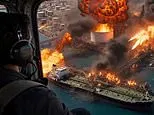
Donald Trump posted an AI-generated video on Truth Social claiming Iran's Kharg Island energy hub, which handles around 90 per cent of the country's oil exports, was "being blown to smithereens," but Iranian officials dismissed the footage as fake, insisting the site remained calm and operational. The claim came as the US and Iran exchanged fresh strikes, with American forces hitting two rocket launchers near the Strait of Hormuz on Sunday, the first such US action against Iran in over a month, prompting Tehran to retaliate against US forces in Jordan and sending oil prices sharply higher.
Hamid Bovard, chief executive of the National Iranian Oil Co, called Trump's claim "laughable," saying operations at Kharg were continuing normally with repair and modernisation work under way. The clash was triggered after Revolutionary Guard forces were spotted preparing to launch sea-mine-carrying rockets into the strait; the IRGC reported fighters killed and injured and vowed retaliation, while Brent crude jumped 2.7 per cent to $90.51 a barrel. The episode unfolded against a backdrop of escalating US sanctions pressure on Iranian banks, with Trump signalling he is in no rush to resume negotiations with Tehran.
- Trump's AI video claiming Kharg Island destruction was dismissed by Iran as fake
- US and Iran traded strikes near the Strait of Hormuz, oil prices surged
- Washington escalating bank sanctions on Iran instead of rushing to negotiate
New here? Start with this
Iran and the United States have been locked in an escalating military standoff, with both sides now trading direct strikes rather than relying on sanctions or diplomacy. Kharg Island, off Iran's southern coast, is central to this because it handles the vast majority of Iran's oil exports, making it economically vital to Tehran and a sensitive flashpoint for global oil markets.
Donald Trump, as US president, has taken a hard line towards Iran, and this latest exchange follows American strikes on rocket launchers near the Strait of Hormuz, a narrow waterway through which much of the world's oil shipments pass. Iran's Revolutionary Guard, the country's elite military force, is a key player in these confrontations, and has previously vowed retaliation against US interests in the region, including forces stationed in Jordan.
The dispute matters beyond the two countries directly involved because any disruption to Kharg Island or the Strait of Hormuz can send oil prices sharply higher worldwide, affecting fuel costs and economies far from the Middle East. Claims and counter-claims made by officials on both sides, including disputed footage and figures, have made it harder for outside observers to verify what is actually happening on the ground.
Both sides, in good faith
The strongest fair case each way — we don't pick a winner.
The case for
Supporters of the administration's approach argue that Iran's apparent preparation to mine the Strait of Hormuz was a direct threat to global shipping and energy security that warranted a swift, forceful response, and that striking the rocket launchers was a proportionate act of self-defence rather than reckless escalation. They contend that projecting strength and unpredictability, including dramatic public messaging, is a legitimate deterrent against a regime they believe responds only to pressure. On this view, maintaining sanctions and declining to rush into talks is sound strategy given Iran's weakened state, since negotiating too soon could squander leverage built up over months of pressure.
The case against
Critics contend that a world leader sharing an AI-generated video of an unverified attack is a serious lapse in responsibility, blurring fact and fabrication at a moment when accurate information is essential to avoiding dangerous miscalculation. They argue that trading military strikes with Iran, rather than pursuing renewed diplomacy, risks drawing the United States into a wider and less controllable conflict, with real costs already visible in surging oil prices and civilian casualties on both sides. From this perspective, sustained pressure without a credible path to negotiation may harden Iranian resistance rather than produce the concessions the strategy is meant to achieve.