Putin ‘fears being hanged’ for failing in Ukraine and is planning to escalate war, insider claims amid Kremlin warnings Britain is in the crosshairs
Developed over time first seen 2 months ago
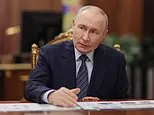
An insider has claimed that Vladimir Putin fears he could be "hanged" if he fails to win the war in Ukraine, and that he is instead planning to escalate the conflict rather than negotiate a settlement without a clear victory. The claims, reported by The Economist, come amid growing Kremlin warnings aimed at Britain and the West, and highlight the pressure Putin reportedly faces from both ordinary Russians and elites increasingly frustrated by the war's toll after four and a half years.
Putin is said to believe he needs to capture the entire Donbas region to avoid a backlash, having told an associate "they will hang me" if he stops short. The report follows a visit to Russia by CIA director John Ratcliffe, with conflicting accounts suggesting he either warned Putin against attacking NATO states or urged him to negotiate given Russia's stalled battlefield campaign; the Kremlin subsequently signalled it was not seeking peace with the West. Putin has also attended a Shanghai Co-operation Organisation summit in Kyrgyzstan alongside Xi Jinping, while Russia's defence ministry has said it is preparing large-scale strikes on Ukraine's energy infrastructure in response to Ukrainian attacks.
- Sources
- 2
- Outlets
- 1
- Left · Centre · Right
- 0 · 0 · 2
In short
- Insider claims Putin fears execution if Ukraine war ends without victory
- Kremlin warns Britain and West as CIA chief visits Moscow
- Russia prepares fresh strikes on Ukraine's energy infrastructure
How this story developed
- 2 months ago An insider has claimed that Vladimir Putin fears he could be "hanged" if he fails to win the war in Ukraine, and that he is instead planning to escalate the conflict rather than negotiate a settlement without a clear victory.
Full account
Vladimir Putin is facing claims from people described as close to the Kremlin that he intends to intensify Russia’s war against Ukraine because ending it without a clear success could endanger his position. The reports, citing The Economist, say he has privately feared being ‘hanged’ if Russia does not at least take the whole of the Donbas. That account is unverified, but it is presented against a backdrop of pressure from Ukrainian drone strikes inside Russia, internet controls and economic difficulties.
The reports point to remarks made by Putin on 22 August as evidence of a harder public line. Addressing United Russia, he said the campaign would continue and that Russia would keep advancing. In a separate address he accused Ukraine of creating a ‘Pandora’s box’ and warned of consequences for sensitive parts of its economy. Kremlin messaging after a reported visit by CIA director John Ratcliffe was similarly confrontational, including a claim that Ukraine was losing the war.
Concern about possible escalation is also linked in the reports to Putin’s assessment of the United States and Nato. One account of Ratcliffe’s visit says he warned Moscow against action against Nato states; another says he presented Russia with a pessimistic view of its military prospects and urged negotiations. Neither version is independently confirmed in the supplied material. The reference to Britain being in the crosshairs reflects wider Kremlin warnings towards Western states rather than a disclosed plan for a specific attack.
Putin met China’s Xi Jinping in Bishkek, Kyrgyzstan, during a Shanghai Cooperation Organisation summit attended by leaders including those of Iran, India, Pakistan, Turkey and Belarus. The Kremlin said Ukraine was discussed but was not the main subject of the bilateral meeting. The gathering allowed Moscow and Beijing again to promote a multipolar international order and to show opposition to Western influence, while the reporting cast it as politically useful to Putin amid the continuing war.
Where outlets differ
From the full account, which is AI-written from the sources:
Source 1 foregrounds warnings involving Britain, the competing descriptions of Ratcliffe’s reported Moscow visit and the possibility of a wider confrontation with Nato.
Source 2 concentrates more on the Putin-Xi meeting and the composition and purpose of the Shanghai Cooperation Organisation summit.
Both reports repeat the claim, attributed via The Economist to a Kremlin insider, that Putin fears domestic consequences if he stops short of his objectives in Donbas.
Source 2 additionally refers to the separate Washington-Tehran conflict and remarks by Iran’s president; this is not central to Source 1’s account.
Steelman: both sides, in good faith
The strongest fair case each way — we don't pick a winner.
The case for
If the insider’s account is accurate, Putin may see a battlefield victory as necessary to preserve his authority and deter challenges from elites or a public bearing the war’s costs. Supporters of continued military pressure could argue that gaining the whole Donbas would strengthen Russia’s position in any eventual settlement and that negotiating while the campaign is stalled might leave Russia exposed to future conflict.
The case against
Escalation risks more deaths, deeper damage to Ukraine’s energy systems and a wider confrontation with Western countries, while offering no guarantee of a decisive victory. Those favouring negotiations could argue that a settlement would limit further harm and that claims of an unavoidable domestic backlash are unverified and should not dictate the war’s course.
Explained simply
The war began when Russia launched a full-scale invasion of Ukraine in February 2022. The Donbas, in eastern Ukraine, includes the Donetsk and Luhansk regions, where Russian-backed forces had fought Ukrainian forces before the invasion; Russia claims the area and has made control of it a central war aim.
Vladimir Putin is Russia’s president, and his government directs the country’s military and foreign policy. The war has brought heavy losses and costs, and the reported account describes pressure on him from Russian citizens and influential figures as the fighting continues.
Britain and other NATO members support Ukraine, while seeking to avoid direct war with Russia. Russia’s warnings to Western countries matter because any clash involving NATO could widen the conflict beyond Ukraine.
Coverage · 2 sources
Bias meters
From 2 rated sources.
- Daily MailRightPutin ‘fears being hanged’ for failing in Ukraine and is planning to escalate war, insider claims amid Kremlin warnings Britain is in the crosshairs
- Daily MailRightPutin meets his ally Chinese President Xi Jinping as they discuss Ukraine amid growing fears Russia is about to escalate war