Adult Swim’s Most Important Show Officially Goes on the Attack Against AI Animation
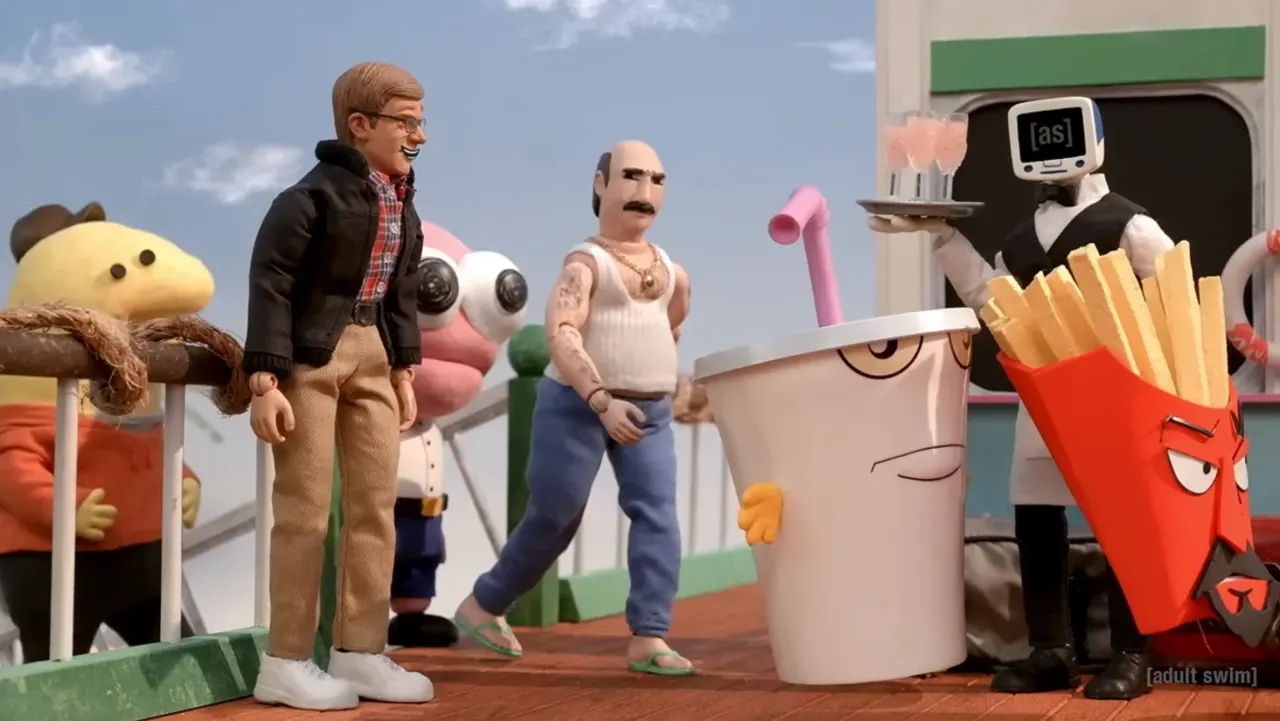
Robot Chicken, the stop-motion sketch show created by Seth Green and Matthew Senreich, has produced a special marking Adult Swim's 25th anniversary in which the second half directly confronts the rise of generative AI in animation. Speaking to Polygon, Green said the aim was "to make the basic case that Adult Swim was not about cheap and stupid animation", positioning the special as a defence of the network's craft-driven identity against critics and, increasingly, against AI-generated content. Given Robot Chicken's status as one of Adult Swim's longest-running and most representative shows, its creators using the anniversary special to take this stance carries symbolic weight for the wider network.
The 30-minute special, an idea Senreich says he had pitched to Adult Swim for years, splits into two parts: the first follows characters from across the Adult Swim catalogue on a cruise led by Joe Pera, while the second moves to a courtroom where an AI has seized control of the network and plans to flood it with cheap, generative animation, only to be defeated. The episode features an extensive crossover of characters from shows including Aqua Teen Hunger Force, Smiling Friends and Common Side Effects, something Senreich likened to Marvel's Secret Wars. Robot Chicken itself launched in 2004, four years after Adult Swim began broadcasting on 2 September with shows such as Home Movies, Space Ghost: Coast to Coast and Cowboy Bebop.
- Robot Chicken's 25th anniversary special attacks generative AI in animation
- Special has AI seizing Adult Swim, defeated in a courtroom plot
- Crosses over characters from across Adult Swim's 25-year history
New here? Start with this
Robot Chicken is a stop-motion sketch comedy show created by Seth Green and Matthew Senreich, and it's been running on Adult Swim since 2004. Adult Swim itself is the late-night, adult-oriented programming block that began in 2000, known for shows like Aqua Teen Hunger Force and Space Ghost: Coast to Coast, and for building a reputation on distinctive, labour-intensive animation styles rather than cheap or formulaic content.
The wider context is the growing use of generative AI to produce animation quickly and cheaply, which has become a point of tension in the animation and wider entertainment industry, with some creators and studios viewing it as a threat to traditional, hands-on craft. Robot Chicken, as one of Adult Swim's flagship and longest-running series, carries particular weight in this debate given its close association with the network's identity and its history of using painstaking stop-motion techniques.
This background matters because it frames Robot Chicken's new anniversary special, which marks 25 years of Adult Swim, as more than a one-off episode. The special brings together characters from across the Adult Swim catalogue, including shows such as Smiling Friends and Common Side Effects, making it a significant crossover event for the network as well as a statement about the kind of animation it wants to be known for.
Both sides, in good faith
The strongest fair case each way — we don't pick a winner.
The case for
Supporters of Robot Chicken's stance argue that Adult Swim's identity has always rested on painstaking, hands-on craft, whether stop-motion or hand-drawn animation, and that this labour is precisely what gives the shows their distinctive charm and comedic timing. They see generative AI as a genuine threat to working animators' livelihoods and to creative standards, since studios under cost pressure may be tempted to flood schedules with cheap, algorithmically produced content that lacks the intentionality of human artists. From this view, using a flagship anniversary special to satirise and reject AI is a principled defence of craftsmanship and the people who practise it.
The case against
Others would argue that dismissing generative AI outright risks being reactionary rather than reasoned, since the technology is still evolving and could, in time, serve as a tool that assists rather than replaces animators, much as digital ink-and-paint and CGI once provoked similar fears before being absorbed into the craft. They might note that a satire like this, however entertaining, simplifies a complex economic and creative debate into villain-versus-hero terms, and that framing all AI-assisted animation as inherently 'cheap and stupid' risks alienating smaller or independent creators who may use such tools out of necessity rather than a lack of artistic ambition. On this reading, a more open-minded, case-by-case approach to AI's role in animation better serves the industry's long-term creative health.