Instagram limits reach of unlabelled AI persona accounts
Developed over time first seen 2 months ago
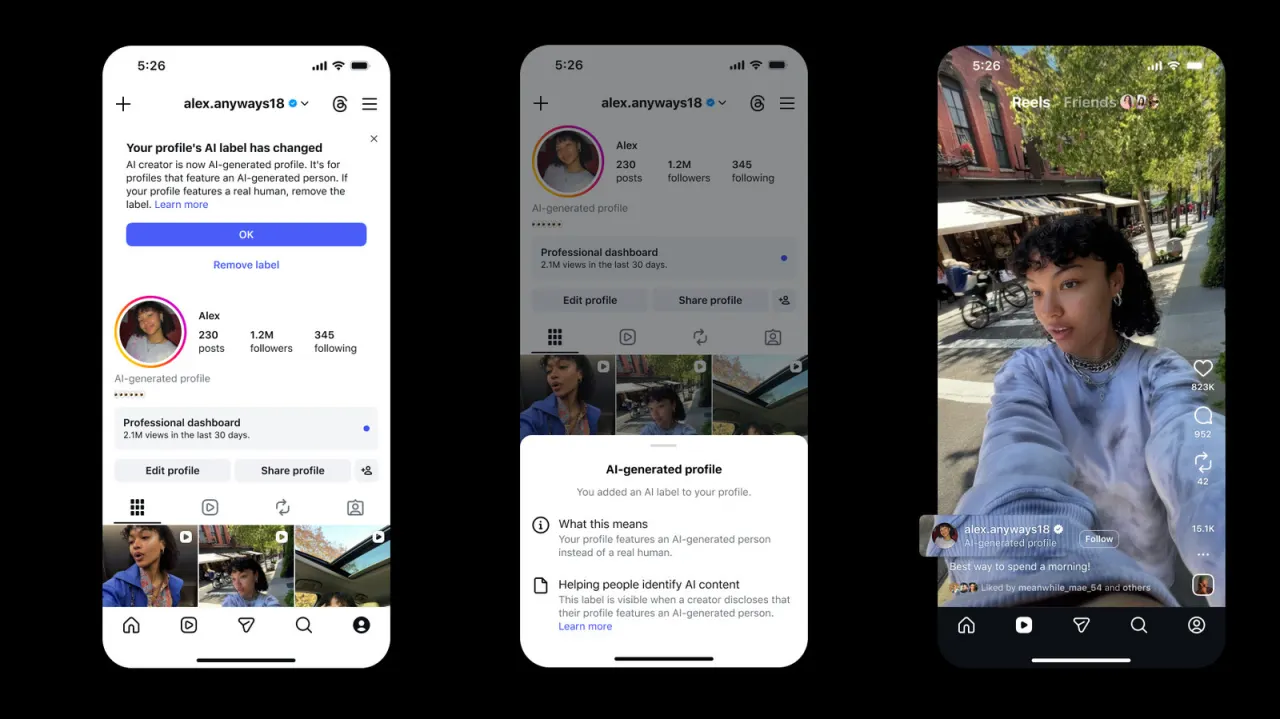
Instagram is cracking down on AI-generated influencer accounts that fail to disclose they are not real people, marking the platform's first concrete enforcement step against undisclosed synthetic personas. The company has renamed its previously voluntary "AI creator" label to "AI-generated profile" and will now actively identify unlabelled accounts and restrict their reach, following complaints from users who felt misled into thinking such profiles belonged to real humans.
Under the policy, flagged accounts will have posts excluded from Reels and Explore recommendations for non-followers, though owners can appeal if they believe they were wrongly flagged. The rule targets profiles built entirely around a synthetic identity rather than creators who simply use AI tools to help produce content, who remain exempt from labelling. Instagram head Adam Mosseri's team framed the change as a transparency measure, though it stops short of letting users filter AI-generated content out of their feeds altogether.
- Instagram penalises unlabelled AI-persona accounts by limiting their reach
- "AI creator" label renamed to "AI-generated profile" for clarity
- Accounts using AI tools for content, not personas, remain unaffected
New here? Start with this
Instagram is the Meta-owned photo and video app used by more than a billion people, many of whom follow "influencers" who post content and interact with fans. Some of these accounts are not run by real people at all, but are built around AI-generated personas, complete with invented faces, personalities and posts, often designed to look and behave like genuine human creators.
Until now, Instagram let creators voluntarily add an "AI creator" label to such profiles, but take-up was patchy and users increasingly complained about being misled into thinking a synthetic persona was a real person. Instagram, run by Adam Mosseri, has been under growing pressure across the tech industry to make AI-generated content more identifiable as it becomes harder to distinguish from real human activity.
This matters because it marks one of the first times a major platform has attached a real consequence, rather than just a voluntary label, to undisclosed AI personas, testing whether such measures can meaningfully improve transparency without banning the content outright.
Both sides, in good faith
The strongest fair case each way — we don't pick a winner.
The case for
Advocates of the policy argue that people have a basic right to know whether they are engaging with a real person or a synthetic construct, particularly given the growing sophistication of AI-generated influencers and the documented cases of users being misled. They see algorithmic de-amplification, rather than outright removal, as a proportionate and light-touch response that preserves creators' ability to operate while incentivising honesty. Limiting unlabelled personas to existing followers, with an appeals process for mistaken flags, is framed as a reasonable balance between platform integrity and creative freedom, and a sensible first step given the pace at which synthetic media is spreading.
The case against
Critics worry that the line between an 'AI-generated persona' and an account that merely uses AI tools is inherently fuzzy, leaving creators exposed to algorithmic judgement calls that can cut their reach and income with little warning or transparent criteria. They question why Instagram is empowered to unilaterally decide what counts as deceptive identity rather than giving users direct tools to filter AI content themselves, and note that an appeals process is small comfort against automated suppression that happens first and is reviewed only after the fact. There is also concern that policing 'identity' rather than content sets a precedent for platforms to shape visibility based on subjective character judgements, with real economic consequences for creators who may be wrongly caught by the policy.
Full account
Instagram has announced new restrictions aimed at social media accounts that present artificial intelligence-generated personas as if they were real people. Under the updated policy, any profile built around a fabricated AI 'human' must now display an 'AI-generated profile' label, and those that fail to do so risk having their content's distribution curtailed by the platform.
The label replaces an earlier, optional 'AI creator' tag that had served as a general marker for accounts regularly posting AI-made material. The new designation is narrower in scope, intended specifically for profiles that feature an invented AI person rather than covering AI content more broadly. Instagram said accounts found showcasing an AI persona without the label may have their posts excluded from being recommended to non-followers in feeds such as Reels and Explore, effectively limiting their reach. Creators who believe they have been penalised in error can lodge an appeal through Instagram's Account Status dashboard.
The change follows growing unease about a wave of convincing but fake AI 'influencers' circulating on the platform, some of which have been used to promote products or brands, while others have posed as wellness experts or medical professionals despite not being real. Instagram, part of Meta, said feedback from users showed frustration at encountering profiles that appear human only to later discover the person shown does not exist. The company framed the labelling requirement as a direct response to that concern, rather than a wider effort to police AI-generated content in general.
Coverage of the announcement diverged in emphasis: one report stressed that the policy is a targeted fix for deceptive AI personas rather than a broader crackdown, noting that Meta has otherwise done little to discourage AI-generated content and, in some cases, actively encourages users to create it. The other account placed more weight on the practical mechanics of enforcement — that Instagram will actively seek out unlabelled AI persona accounts and cut their algorithmic reach — while also noting more pointedly that everyday creators using AI tools to help produce content are not required to add the label, meaning the change will do little to reduce the broader volume of AI-generated material users encounter on the app.
Where outlets differ
One source frames the update mainly as a narrow, targeted measure against deceptive AI personas and contrasts it with Meta's general reluctance to discourage AI content elsewhere on the platform, citing prior investigative reporting (by the Guardian and New York Times) on fake AI influencers and wellness accounts as context for why the change was needed.
The other source focuses more on the enforcement mechanics — specifically that flagged posts will be excluded from Reels and Explore recommendations to non-followers — and adopts a more sceptical, editorial tone toward Meta/Instagram's leadership, suggesting the move is a modest first step rather than a meaningful solution to AI clutter on the platform.
Only one source explicitly notes that creators using AI tools to assist with content (as opposed to running an AI persona account) are exempt from the labelling requirement, underlining that the policy does not address AI-generated content more broadly.
Coverage
- Engadget — Instagram to reduce reach for unlabeled AI persona accounts
- The Verge — Instagram cracks down on AI accounts pretending to be human