Healey seeks G20 defence funding cooperation before UK Budget
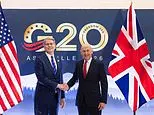
Chancellor John Healey has called on G20 counterparts to boost international cooperation on defence funding, using talks in North Carolina to push for joint mechanisms to strengthen collective economic resilience. He cited the impact of the Iran conflict on energy prices as evidence that no single country can absorb such shocks alone, framing the push as a way to ease pressure on households and businesses. The summit comes as the UK's fiscal outlook darkens ahead of the Budget on 28 October, with concerns mounting over government borrowing and spending control.
At the summit, Healey met US Treasury Secretary Scott Bessent, Canada's Francois-Philippe Champagne and IMF chief Kristalina Georgieva. Public sector borrowing rose unexpectedly to £1.8 billion in July despite record income tax receipts, while inflation climbed to a four-month high of 2.9%. Healey, who resigned as Defence Secretary over the lack of a timetable for reaching 3% of GDP on defence spending, is not expected to set such a schedule at the Budget, instead deferring to next year's spending review, and has pledged to stick to the fiscal rules inherited from Rachel Reeves.
In short
- Healey pushes G20 allies for joint defence funding cooperation
- UK borrowing and inflation rose ahead of 28 October Budget
- No 3% defence spending timetable expected until next year's review
Steelman: both sides, in good faith
The strongest fair case each way — we don't pick a winner.
The case for
International cooperation on defence funding could help countries share the cost of security and economic shocks that cross borders, such as energy-price rises linked to conflict. Supporters could argue that coordinated financing would strengthen collective resilience and reduce the risk that households and businesses in any one country bear the full strain.
The case against
With borrowing rising and the Budget approaching, critics could argue that new international funding commitments risk adding pressure before the government has set out how it will meet existing fiscal rules. They may also favour national control over defence budgets, arguing that governments should first explain domestic spending priorities and plans for defence investment.
Explained simply
The G20 is a group of major economies that meet to discuss issues affecting the global economy. Defence spending is usually decided by each government, while international cooperation can include sharing costs, resources or plans. Energy price rises linked to conflict can affect countries well beyond the region where fighting takes place.
John Healey is the UK Chancellor, responsible for government finances, and has been discussing funding with other G20 officials, including US Treasury Secretary Scott Bessent and IMF chief Kristalina Georgieva. The IMF is an international organisation that monitors economies and provides financial support to countries. The talks take place as the UK prepares its Budget, when the government sets out tax and spending plans.
The UK’s borrowing and inflation figures shape the choices available to the government. Defence spending is also part of that debate: Healey has argued for a timetable to raise it to 3% of national income, while the government’s spending plans are due to be considered in a later review.
Art Culture Government Politics World
Read the full article at the source →
Originally published by Daily Mail as “Chancellor John Healey urges G20 allies to cooperate on defence funding as Government finances get even tighter ahead of Budget”.