Onimusha: Way of the Sword Revives Capcom’s Samurai Franchise with Demanding, Philosophy-Driven Combat
Developing story first seen 1 hour ago
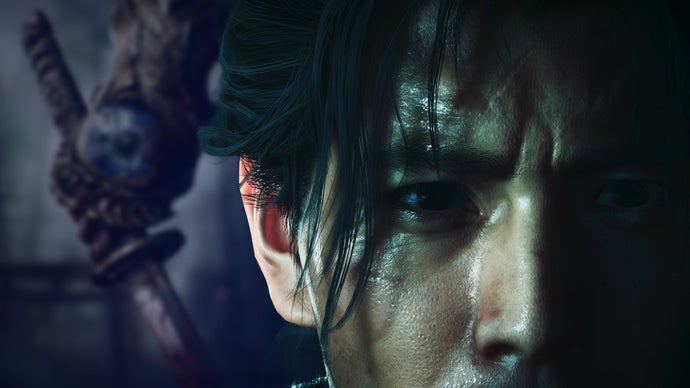
New details from Polygon's review of Onimusha: Way of the Sword flesh out how Capcom has reimagined its dormant samurai series, confirming it as a near-total reboot rather than a straightforward sequel. Gone is the fixed-camera, Resident Evil-style exploration of the original four PS2-era games (2001–2006); in its place is a modern action RPG structure blending influences from Dark Souls, Star Wars Jedi and Yakuza, with players alternating between linear combat levels and a hub village offering side-quests and collectible dogs.
The story follows the real-life swordsman Miyamoto Musashi, whose face is modelled on actor Toshirō Mifune, as he is cuffed to a talking demonic gauntlet after a near-death encounter and reluctantly drawn into battling monstrous Genma overrunning Edo-era Kyoto. Voice actor Kenichiro Thomson plays him as a cocky, reluctant hero whose arc mirrors the game's demanding, counter-focused combat system, though the narrative grows convoluted in its second half. The review reiterates that while the swordplay is intense and thematically coherent, repetitive boss encounters—including a fight reminiscent of Elden Ring's disliked Godskin Duo—undercut the overall experience after roughly 20 hours of play.
- Onimusha reboot ditches fixed-camera exploration for modern action-RPG structure
- Story follows real swordsman Musashi bound to a demonic gauntlet
- Praised combat, but repetitive boss fights weaken the experience
New here? Start with this
Onimusha is one of Capcom's best-known franchises, a series of samurai action games originally released on PlayStation 2 between 2001 and 2006. Those older games were known for fixed camera angles and slow, exploration-heavy gameplay similar to Resident Evil, and the series has been dormant for years. Way of the Sword is a new entry that Capcom has built almost from scratch, using a modern action-RPG format inspired by games such as Dark Souls and Star Wars Jedi, rather than simply continuing where the old titles left off.
The game centres on Miyamoto Musashi, a real historical Japanese swordsman famed for his skill and writings on strategy, reimagined here with a face modelled on the classic Japanese film actor Toshirō Mifune. In the story, he is bound to a talking demonic gauntlet and forced to fight monstrous creatures called Genma that are overrunning Kyoto during Japan's Edo period, a setting that blends real history with folklore and fantasy.
The story matters to gamers because it marks a significant attempt to revive a long-dormant franchise for modern audiences, testing whether Capcom can successfully modernise its combat and structure while keeping the series' identity intact. Reviews of the finished game, such as the one referenced here, help set expectations for how well that reinvention has worked in practice.
Full account
Capcom has returned to its long-dormant Onimusha series with Way of the Sword, a loose retelling of the exploits of Miyamoto Musashi, the celebrated 16th-century swordsman and author of The Book of Five Rings. Rather than simply modernising the fixed-camera, survival-horror-inspired formula of the original PlayStation 2 games, the studio has built an entirely new combat system around patience, observation and precise timing, reportedly developed with the help of real swordsmen brought in to choreograph and motion-capture the fighting.
At the heart of that system is a counterattack called the 'issen', triggered by correctly reading an enemy's incoming light or heavy strike and interrupting it before it lands. Reviewers note that this rewards restraint over aggression: standard attack strings feel deliberately weak, serving mainly to bait and unsettle foes rather than finish them, while the real damage comes from well-timed parries, dodges and follow-ups. The result is a game that leans heavily on Musashi's own writings about intuition and attentiveness to small details, translating that philosophy into moment-to-moment swordplay that demands sustained concentration, particularly in longer, higher-stakes duels.
Structurally, Way of the Sword marks a significant departure from its PS2-era predecessors. Gone is the tight, puzzle-laden exploration of the earlier instalments; in its place is a more contemporary action-RPG loop, alternating between linear combat stages and a hub village where players pick up side-quests, collect items such as dogs, and gradually build up their character. The story casts Musashi, whose likeness draws on the actor Toshirō Mifune, as a reluctant hero saddled with a sentient Oni gauntlet after a near-fatal encounter, forcing him into a campaign against demonic Genma forces overrunning Edo-period Kyoto, with his brash, irreverent personality played up through voice performance.
Coverage of the game diverges most sharply on its difficulty and pacing. One account frames the combat as an almost meditative achievement, arguing it outclasses comparable difficult action games in rewarding careful, thoughtful play, and dwells on the historical grounding in Musashi's own life and martial philosophy. The other take is considerably more mixed, praising the thematic link between the game's brutal duels and its narrative concerns with endurance and strength, but criticising the campaign — roughly twenty hours long — for reusing the same handful of bosses and padding itself with repetitive busywork, leaving that reviewer less convinced the struggle was ultimately worthwhile. There is also a difference of emphasis: one report concentrates on mechanical and philosophical analysis of the combat, while the other spends more time on tone, structure and how the new game compares to the series' PS2 roots.
Where outlets differ
One outlet is largely celebratory about the combat's depth and philosophical grounding, comparing it favourably to Nioh, Wo Long and Sekiro; the other is more critical, citing repetitive boss reuse and padding over a roughly 20-hour campaign.
Source 1 emphasises Musashi's real-life biography and swordsmanship philosophy (Book of Five Rings, reputed 60 duels, two-sword technique) as a lens for the combat design.
Source 2 focuses more on narrative structure and tone — the shift away from PS2-era fixed-camera exploration, the hub-village RPG loop, and Musashi's irreverent characterisation and voice performance.
Coverage
- Eurogamer — Onimusha: Way of the Sword review
- Polygon — Onimusha: Way of the Sword Review: Capcom’s Samurai Epic Overstays Its Welcome