Trump backs federal tax credit for US film production
Developed over time first seen 2 months ago
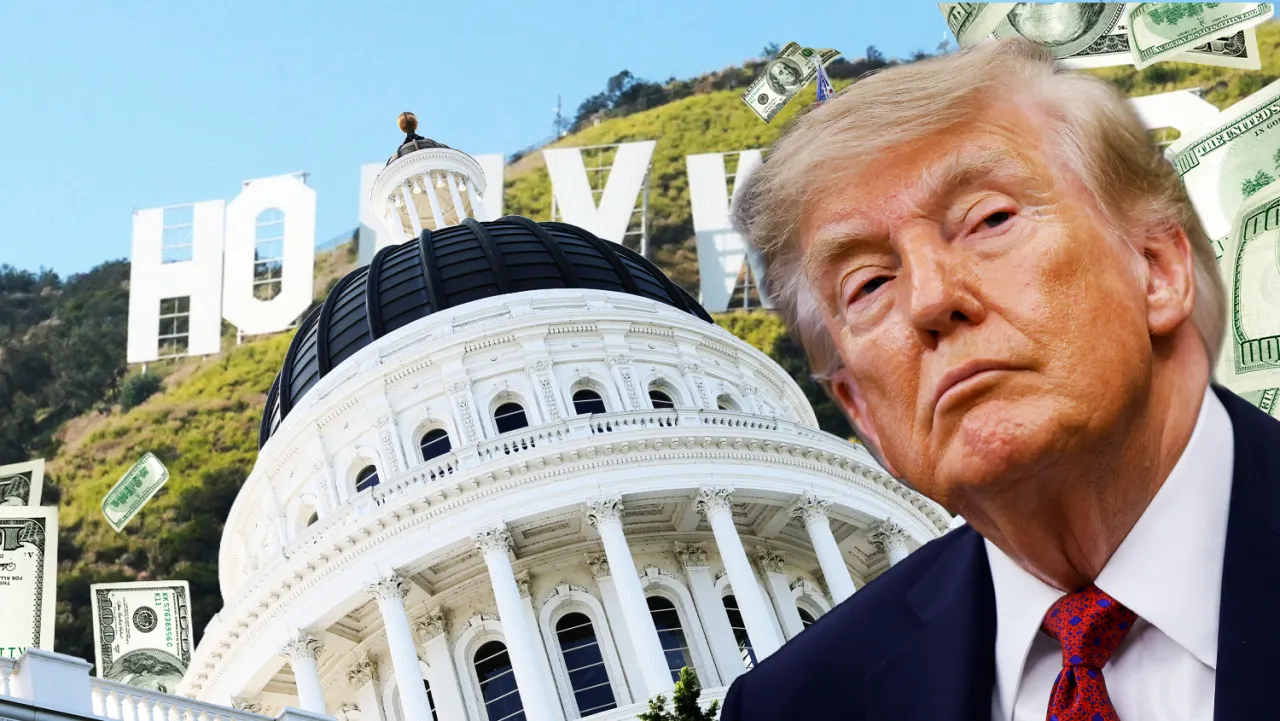
President Trump has thrown his support behind a federal tax incentive for American film and television production, ending months of uncertainty over how he would respond to industry pressure. Posting on Truth Social, he called on Republicans and Democrats to swiftly craft bipartisan legislation, framing it as a way to bring production back to the United States after years of jobs moving overseas. The announcement marks a significant shift from his earlier threat to impose a 100% tariff on foreign-made films, after studios and unions lobbied him towards a tax credit model similar to those already used by Canada, the UK and 39 US states. Motion Picture Association chief executive Charles Rivkin welcomed the move, calling it a potential "landmark step" for production communities nationwide.
The push follows a sharp decline in domestic filming since the streaming bubble burst in 2022, with an estimated 73,000 industry jobs lost nationwide, roughly two-thirds of them in Los Angeles. Democratic senator Adam Schiff had already circulated draft legislation proposing a 15% credit on US labour costs, while the MPA has been working with Trump's Hollywood "special ambassador" Jon Voight to secure a more generous 20% credit; Republicans had reportedly been waiting for a signal from the White House before acting. Trump said any federal incentive would stack atop existing state-level credits and would pay for itself many times over through increased Treasury revenue, while separate efforts continue to revive Section 181, a lapsed tax provision benefiting independent producers.
- Trump backs federal tax credit to revive US film production
- Shift follows lobbying away from his 100% foreign film tariff threat
- Around 73,000 industry jobs lost since 2022 streaming downturn
New here? Start with this
Trump has said he wants Congress to create a federal tax break to encourage more film and television production to happen in the United States, rather than abroad. The idea has grown out of months of lobbying by Hollywood studios and unions, who persuaded him to drop an earlier threat to slap a 100% tariff on foreign-made films in favour of this incentive-based approach.
The push involves several key players. The Motion Picture Association, the industry body representing major studios, has backed the plan, and its lobbying has been channelled partly through actor Jon Voight, who Trump appointed as a "special ambassador" to Hollywood. On the political side, Democratic senator Adam Schiff has drafted his own version of the legislation, while Republican lawmakers have reportedly been waiting for a signal from the White House before acting.
The issue matters because the US film and TV industry has shed a large number of jobs since streaming services pulled back on spending after 2022, with Los Angeles particularly affected. Many US states and a large number of other countries already offer tax incentives to attract film production, which supporters argue has drawn work away from America, making a federal-level credit a way of competing for that business.
Both sides, in good faith
The strongest fair case each way — we don't pick a winner.
The case for
Supporters argue that America's film and television industry has haemorrhaged tens of thousands of jobs since the streaming downturn, with Los Angeles hit hardest, and that this has happened largely because 39 states and around 80 other countries now offer competitive incentives that lure productions away. On this view, a federal tax credit is simply levelling the playing field rather than picking winners, protecting skilled blue-collar crew jobs and a culturally significant American export, and a negotiated credit is a more workable, less disruptive tool than the tariff threat it replaced, which explains why it has drawn support from figures across the political spectrum, including Democrats like Adam Schiff.
The case against
Critics contend that a highly profitable global industry dominated by major studios and streamers should not receive new federal subsidies, especially when the underlying job losses stem from streaming economics and corporate restructuring rather than a lack of tax breaks. They point out that the policy followed direct lobbying by studios and unions who successfully redirected the administration from a tariff to a credit that benefits their bottom line, raising concerns about targeted tax relief shaped by well-connected interests rather than neutral economic principle, and warn it risks fuelling a wider race-to-the-bottom in subsidy competition between states and countries rather than resolving it.
Full account
President Donald Trump has publicly backed the introduction of a federal tax credit for film and television production made in the United States, describing the state of the domestic industry as dire and calling on Congress to act swiftly. In a lengthy post on Truth Social on Monday, made after speaking with actor and self-styled 'Hollywood ambassador' Jon Voight, Trump said the sector was struggling badly and needed government support to bring work back from overseas.
Trump argued that production had drained away to other countries, particularly Canada, leaving American crews with little to do and inflicting serious economic damage on California. He suggested that any money spent on incentives would ultimately be recouped many times over through higher tax revenues, and said he wanted to see Republicans and Democrats work together to draft legislation 'immediately'. He indicated that meetings with congressional leaders from both parties were already being arranged, framing the push explicitly as a bipartisan effort at a moment when the parties are gearing up for the midterm elections.
The intervention follows years of pressure from studios, unions and lawmakers, who have watched production migrate to jurisdictions offering more generous incentives, including Canada, the United Kingdom, Australia and dozens of individual US states. Supporters point to a sharp contraction in domestic filming since the streaming market cooled in 2022, with estimates of roughly 73,000 jobs lost nationwide, the bulk of them in Los Angeles. Trump had previously floated the idea of imposing a steep tariff on films made abroad, but never carried this through; attention has since shifted towards a tax credit modelled on those used by rival production hubs, with proposals from various quarters ranging from around 15 to 25 per cent.
The Motion Picture Association welcomed the announcement, with chief executive Charles Rivkin calling it a potential 'landmark step' that would strengthen the industry across all 50 states and pledging to keep working with the White House and Congress to turn it into law. Voight has spent more than a year lobbying for such a measure alongside industry groups, while other figures said to have pressed the case in recent months include Paramount Skydance's David Ellison and television personality Spencer Pratt. Democratic senator Adam Schiff, who held a hearing on the issue in the spring and has circulated his own draft proposal, was cited as having long argued that Republican lawmakers were simply awaiting a signal of support from Trump before moving forward.
Where outlets differ
Source 1 places most weight on the political framing, presenting Trump's push for bipartisanship as tied to the upcoming midterms, and cites a broad '25% range' as the emerging consensus figure alongside Voight, Pratt and Schiff.
Source 2 emphasises the lead-up to the announcement, detailing recent lobbying efforts by figures such as Paramount Skydance's David Ellison (amid his company's antitrust scrutiny) and Spencer Pratt, and frames the story around Republicans having awaited a cue from the White House.
Source 3 provides the most specific statistics and figures, citing roughly 73,000 job losses (two-thirds in Los Angeles), Schiff's proposed 15% credit versus the MPA/Voight-backed 20%, and gives fuller detail on Trump's earlier, unrealised threat of a 100% tariff on overseas-made films.
Coverage
- Deadline — Trump Backs Federal Film & TV Tax Incentive: “Hollywood Is A Complete & Total Disaster!”
- The Hollywood Reporter — Trump Calls for Passage of Federal Film and TV Tax Incentive: “Let‘s Get This Done!”
- Variety — Trump Endorses U.S. Tax Incentive to Keep Hollywood Production: ‘Let’s Get This Done!’
Art Business Celebrity Culture Entertainment Film Government Markets Politics TV